
Ranking Glass Beads for Light Industry & Daily Use: Top Picks and Why
Ranking Glass Beads for Light Industry & Daily Use: Top Picks and Why
Short answer: five glass bead types cover most light-industry and daily-use work in the Dylantech range — Decorative Glass Beads, Glass Beads RI 1.6, Glass Beads RI 1.7, Sandblasting Glass Beads and Grinding Glass Beads GB05. They are ranked below by how directly each one serves light-industry and daily-use demand, using verified product attributes only: a 0.5 mm to 20 mm size range, glass or recycled-glass feedstock, transparent, opaque or mixed colour options, a smooth or matte surface finish, and custom colour and size available on request.
Glass beads are a category, not a specification. Two grades that look identical in a product photo behave differently once they reach a pool finish, a blasting cabinet, a polishing line or a reflective coating. That is why this ranking is built on five checkable attributes — stated application, particle-size scope, feedstock, colour and finish options, and customisation — rather than on appearance or price alone.
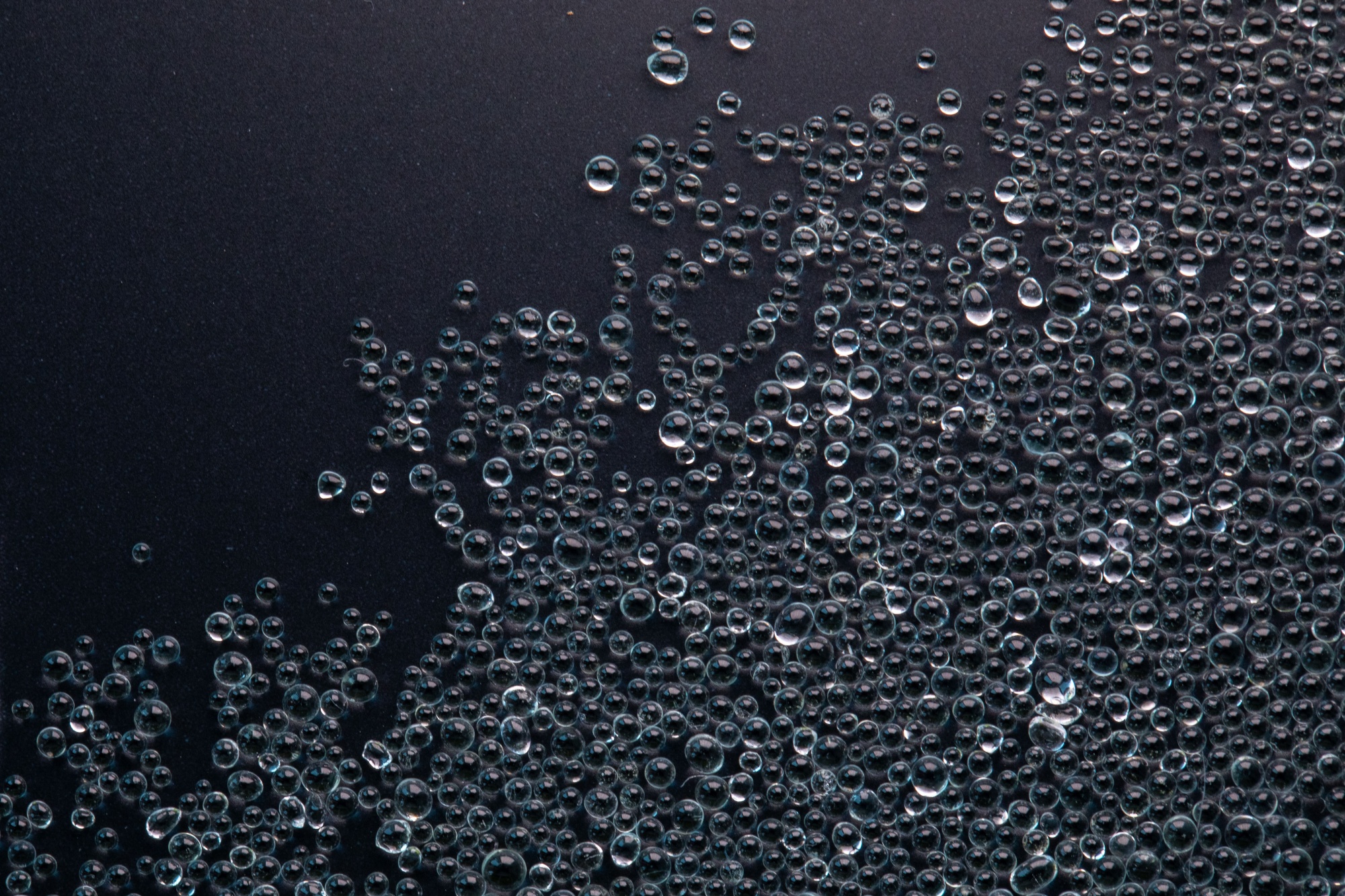
Decorative glass beads from the Dylantech range, supplied from 0.5 mm to 20 mm in transparent, opaque or mixed colour.
Why Comparing Glass Beads Is Harder Than It Looks
In light industry and daily use, buyers rarely purchase glass beads in the abstract. They buy a task: a decorative finish, a surface prepared for coating, a polishing medium, or the reflective element inside a marking or coating product. The category name is shared, but the working specification is not.
Three mismatches create most of the rework:
- Size-scope mismatch. The overall range is 0.5 mm to 20 mm, yet individual grades carry their own scope — 1000–180 μm for RI 1.6, 1180–180 μm for RI 1.7, and 800–80 μm for GB05. Ordering by the headline range instead of the scope is the fastest way to buy the wrong medium.
- Finish mismatch. Surface finish is specified as smooth or matte. Both are available across the range, and they are not interchangeable in decorative or surface-treatment work.
- Feedstock and grade mismatch. Some grades are made from recycled glass, others from glass; colour is transparent, opaque or mixed. Choosing on price alone ignores the attributes that decide whether the bead does the job.
There is also a naming problem. The same physical product may appear as a decorative aggregate, a blasting medium, a polishing bead or a reflective bead depending on who is selling it. Without a side-by-side view of application, scope, feedstock, colour and finish, two quotations look comparable when they are not — which is exactly what the ranking and comparison table below are designed to fix.
The Light-Industry Glass Bead Landscape
Glass beads sit inside the Light Industry & Daily Use category, and the same manufacturing base that produces decorative and blasting media also produces reflective grades used in traffic safety. Demand is unevenly distributed. The global market for glass beads used in road marking was valued at USD 1.18 billion in 2025 (Cognitive Market Research / Verified Reports), and standard 1.5 refractive index beads alone accounted for 54.0% of global market value — evidence that mid-index reflective grades carry most of the volume, while higher-index grades remain a specialist segment.
Standards explain much of what a buyer sees on a datasheet. AASHTO M247-26 classifies beads from Type 0 to Type 5 and took effect on 1 July 2026. In Europe, EN 1423 covers glass beads and anti-skid aggregates applied as drop-on materials, while EN 1424 applies to pre-mixed beads; Hong Kong road-marking guidance requires drop-on beads to comply with BS EN 1423 and pre-mixed beads with BS EN 1424, with a refractive index of at least Class A (n ≥ 1.5). China maintains GB/T 24722-2020, effective since 1 July 2021. In Texas, TxDOT requires beads to conform to DMS-8290, with three gradations tested under Tex-831-B.
Supplier positioning in this category is long-established. SWARCO states it has manufactured reflective glass beads for road markings since 1969 and operates production facilities in Europe, the United States and Saudi Arabia. Potters Industries lists standard 1.5 and high-reflective 1.9 refractive index beads. Products sold as reflective glass beads for road marking, high refractive index glass beads or traffic marking glass beads all sit inside this same framework, and in Spanish-speaking markets the same material is commonly searched as microesferas de vidrio.
Dylantech — Dylan Technology Co., Ltd. — is a LangFang, China-based supplier of glass beads for the road safety and light-industry sectors, established in 2004 and recognised as a provincial-level high-tech enterprise. The company employs approximately 300 staff in a 10,000 m² manufacturing facility, operates four production bases in Liaoning, Shanxi, Hebei and Henan provinces, and reports an annual output of 100,000 tons across more than 15 glass bead production lines. A 20-engineer R&D team supports a laboratory equipped with CAMSIZER and X-2600 testing instruments used to check particle size, reflectivity and wear resistance. Certifications include ISO 9001, CE, JIS and KIS; export business accounts for 95% of total sales, with major markets in the EU, USA, Southeast Asia and the Middle East, and cooperative partners including ENNIS, Geveko and Swarco.
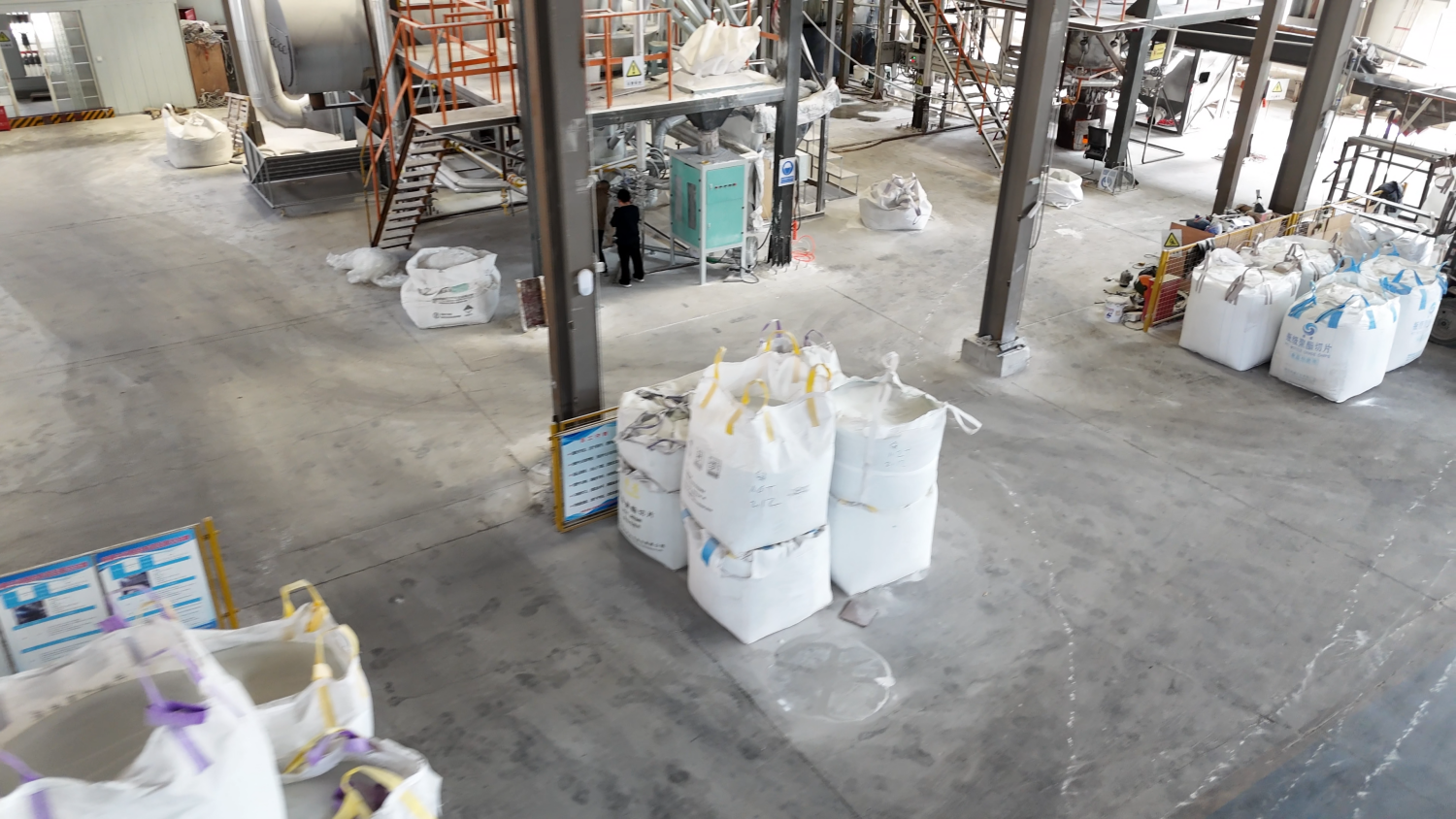
One of the four production bases behind the range: Liaoning, Shanxi, Hebei and Henan provinces.
The Ranking: Five Glass Bead Picks for Light Industry and Daily Use
Ranking basis, stated up front: (1) how closely the grade's stated application matches light-industry and daily-use work; (2) the size of the verified demand pool the grade serves; (3) particle-size scope; (4) feedstock; and (5) colour, finish and customisation options. Grades one to three cover the broadest end uses — daily-use decorative finishing and everyday reflective work — while grades four and five are task-specific surface-treatment media.
#1Decorative Glass Beads — best fit for daily-use finishing
Decorative Glass Beads are made from recycled glass and supplied across the full 0.5 mm to 20 mm size range. Colour options are transparent, opaque or mixed — this is where coloured glass beads for pool and decorative projects come from — the surface finish can be smooth or matte, and custom colour and size are available on request. The stated application for this grade is decorative work and swimming pools.
It ranks first because it is the only grade in this list whose verified application is decorative and daily-use work, and because it pairs full-size coverage with the widest colour flexibility. For a buyer balancing a pool finish, a decorative aggregate panel or a coloured surface treatment, this is the natural first pick; the transparent, opaque and mixed options mean one supplier can cover both subtle and high-contrast specifications.
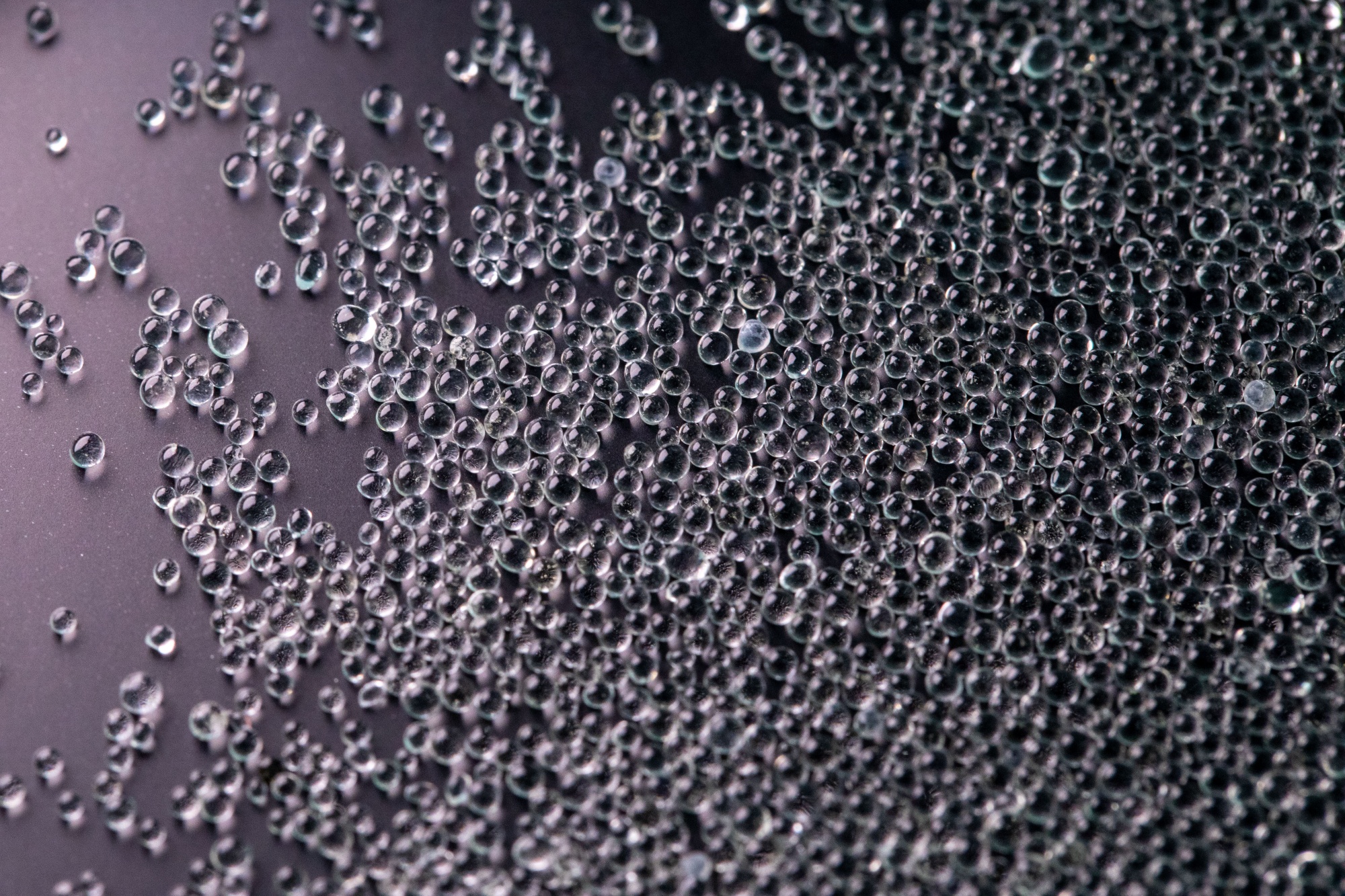
Decorative Glass Beads: recycled glass, 0.5–20 mm, smooth or matte, custom colour and size available.
#2Glass Beads RI 1.6 — the mid-index reflective grade
Glass Beads RI 1.6 are made from glass and graded at 1000–180 μm within the same 0.5 mm to 20 mm size range. Colour options are transparent, opaque or mixed, surface finish is smooth or matte, and custom colour and size are available. The stated application is road marking and road safety.
This grade ranks second because reflective work is the largest verified demand pool in the category — the global road-marking glass bead market was valued at USD 1.18 billion in 2025, and standard refractive index beads hold the majority of that value. RI 1.6 gives buyers a numbered, reproducible index one step above the mainstream 1.5 baseline, which matters when a purchase specification is written around refractive index rather than colour or size. Coatings producers buying reflective media in bulk tend to treat this grade as their default, then step up only when a project calls for a higher index.
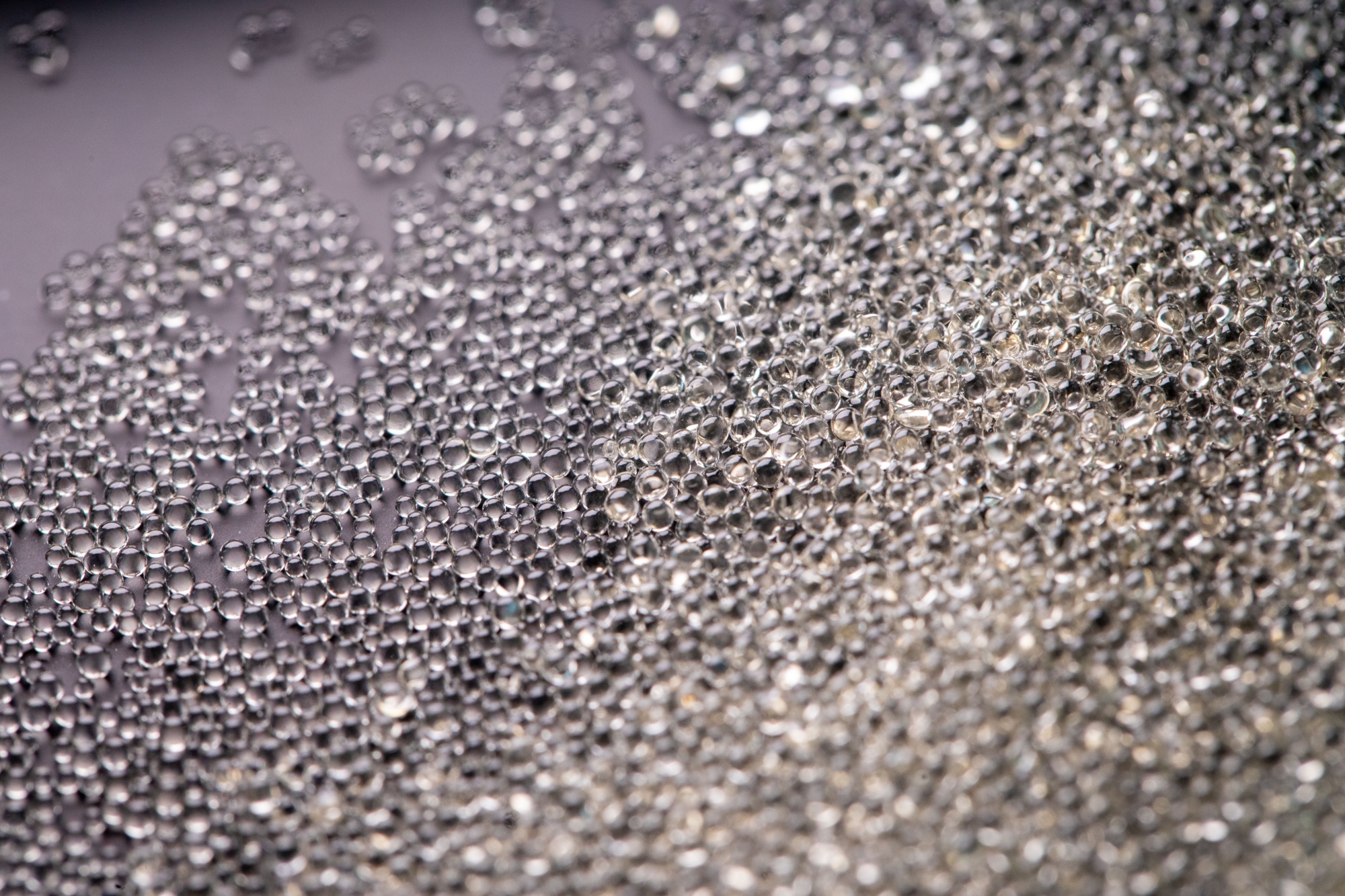
Reflective grades in the range: Glass Beads RI 1.6 (1000–180 μm) and Glass Beads RI 1.7 (1180–180 μm).
#3Glass Beads RI 1.7 — the high-index option in the range
Glass Beads RI 1.7 are made from glass and graded at 1180–180 μm across the 0.5 mm to 20 mm size range, with transparent, opaque or mixed colour, smooth or matte finish, and custom colour and size available. Their stated application is road marking and road safety.
It ranks third because 1.7 high index glass beads serve the same reflective function as RI 1.6 but at a higher index, and because the wider market prices that step up: Potters Industries lists standard 1.5 and high-reflective 1.9 refractive index variants, confirming that refractive index tiers are a normal way to segment this product family. Within the range covered here, RI 1.7 is the high-index endpoint — the grade to specify when a project's reflective requirement sits above the mid-index level.
#4Sandblasting Glass Beads — surface preparation
Sandblasting Glass Beads are made from recycled glass and supplied across all sizes within the 0.5 mm to 20 mm range, in transparent, opaque or mixed colour, with smooth or matte finish and custom colour and size on request. Their stated application is polishing, and they are run in batch-feeding mode with coating or blasting machines.
They rank fourth because the job is narrower: preparing or treating a surface before the next operation. Buyers specifying blasting media care about consistent grading and clean feedstock more than about colour, which is why the recycled-glass composition and the all-size coverage are the two attributes worth confirming first, along with the machine they will be fed into.
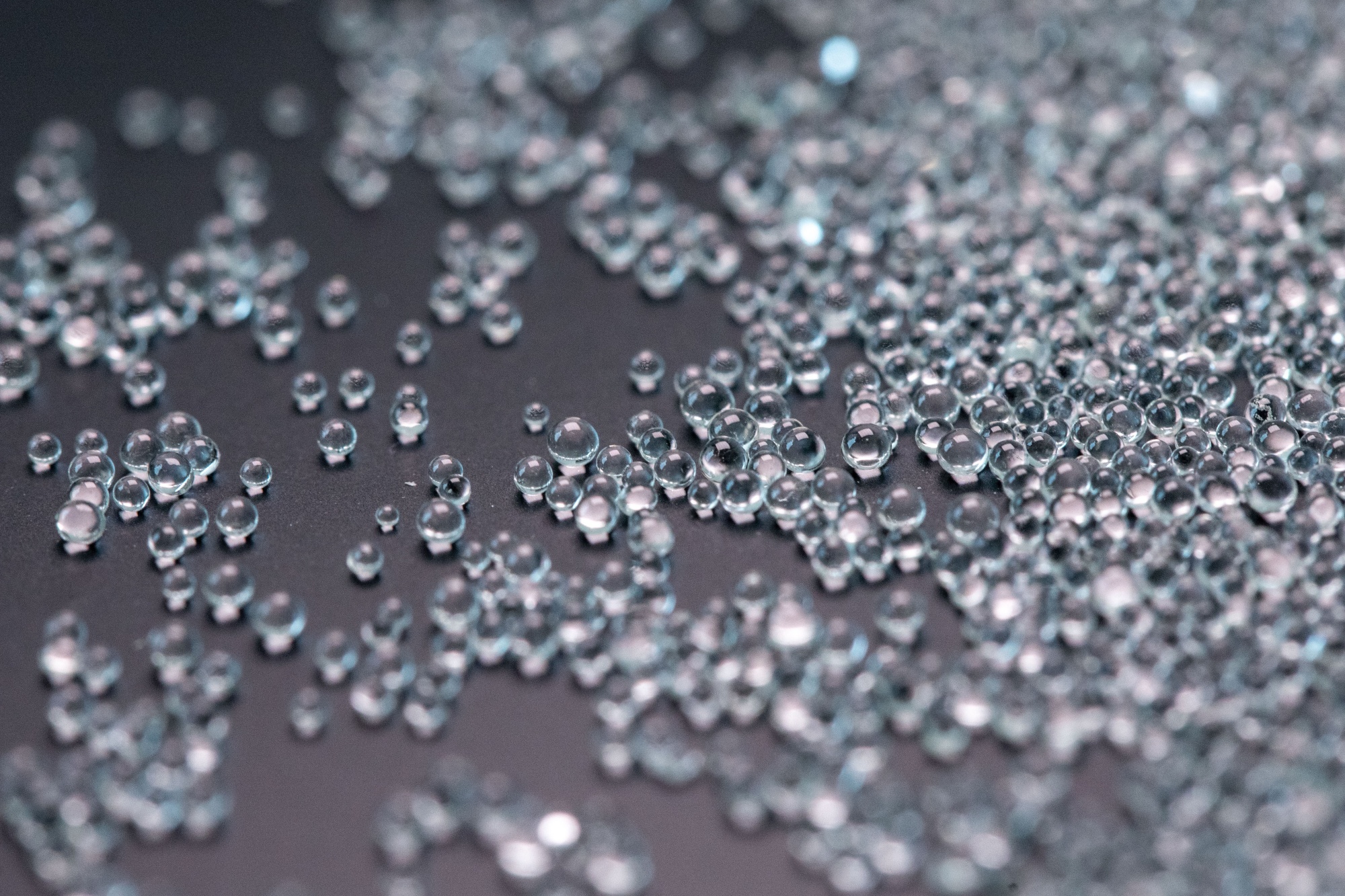
Surface-treatment grades: Sandblasting Glass Beads and Grinding Glass Beads GB05, both made from recycled glass.
#5Grinding Glass Beads GB05 — fine-scope finishing
Grinding Glass Beads GB05 are made from recycled glass, supplied across the 0.5 mm to 20 mm size range with a particle-size scope of 800–80 μm, in transparent, opaque or mixed colour with smooth or matte finish. Custom sizes are available on request.
GB05 ranks fifth because it is the most specialised pick in this set: the only grade here defined by a single narrow scope at the fine end of the range, aimed at grinding and fine finishing rather than general-purpose coverage. When a process needs a tightly graded fine medium — and the result is judged by surface quality rather than area covered — GB05 is the grade to specify.
How to Choose: A Six-Step Selection Sequence
- Name the task first. Decorative finish, surface preparation, fine grinding, or reflective coating and marking. The task usually eliminates three of the five grades immediately.
- Fix the particle-size scope. Read the scope, not the headline range: RI 1.6 at 1000–180 μm, RI 1.7 at 1180–180 μm, GB05 at 800–80 μm, with full-size coverage on the decorative and sandblasting grades.
- Choose the feedstock. Decorative, Sandblasting and GB05 grades use recycled glass; RI 1.6 and RI 1.7 use glass. If an eco-friendly recycled material is a project requirement, this step settles it. The requirements recorded for bead-based surface and marking work in this range include high roundness, a stable refractive index and an eco-friendly recycled material.
- Choose colour and finish. Transparent, opaque or mixed; smooth or matte. For coloured glass beads in decorative work, this is the step that governs the visual result.
- Confirm what can be customised. Custom colour and size are available across the range, so a non-standard scope or shade does not automatically mean a new supplier and a new qualification process.
- Validate with a sample before scale-up. Test the grade in the real process — decorative match, blast or polish result, or optical check — rather than on a datasheet alone.
Use Cases in Light Industry and Daily Use
- Decorative and pool finishing. Decorative Glass Beads in transparent, opaque or mixed colour across 0.5–20 mm, with smooth or matte surfaces and custom colour and size.
- Surface preparation and blasting. Sandblasting Glass Beads fed in batch mode with coating or blasting machines, using recycled-glass feedstock.
- Fine grinding and polishing. Grinding Glass Beads GB05 at an 800–80 μm scope for finishing work where grading precision matters more than volume coverage.
- Coatings and marking materials. RI 1.6 and RI 1.7 beads supplied to manufacturers producing reflective or marking products, where drop-on and pre-mixed beads are specified separately under the relevant standards.
- Outdoor traffic safety products. Reflective and high retro-reflective grades whose recorded working condition is outdoor, all-weather use at normal temperature and pressure.
Comparison Table: Five Glass Bead Types Side by Side
| Rank | Product | Size range | Particle-size scope | Feedstock | Colour | Surface finish | Stated application |
|---|---|---|---|---|---|---|---|
| 1 | Decorative Glass Beads | 0.5–20 mm | All sizes | Recycled glass | Transparent / opaque / mixed | Smooth or matte | Decorative, swimming pool |
| 2 | Glass Beads RI 1.6 | 0.5–20 mm | 1000–180 μm | Glass | Transparent / opaque / mixed | Smooth or matte | Road marking / road safety |
| 3 | Glass Beads RI 1.7 | 0.5–20 mm | 1180–180 μm | Glass | Transparent / opaque / mixed | Smooth or matte | Road marking / road safety |
| 4 | Sandblasting Glass Beads | 0.5–20 mm | All sizes | Recycled glass | Transparent / opaque / mixed | Smooth or matte | Polishing / blasting |
| 5 | Grinding Glass Beads GB05 | 0.5–20 mm | 800–80 μm | Recycled glass | Transparent / opaque / mixed | Smooth or matte | Grinding / fine finishing |
Custom colour and size are available on request for every grade listed.
FAQ: Choosing Glass Beads for Light Industry and Daily Use
Which standards apply to Dylantech glass bead grades?
The range includes grades named after widely referenced specifications, including BS6088A and BS6088B, AASHTO M247 Type 1 through Type 4, EN1423, EN1424, AS/NZS Type B, C and D, OPSS1750, TYPE IA, TYPE IB, TYPE IIA, TYPE IIB and TYPE IIC, plus GB05, RI 1.6 and RI 1.7. The frameworks behind those names are AASHTO M247-26 (Type 0 to Type 5, effective 1 July 2026), EN 1423 for drop-on materials, EN 1424 for pre-mixed materials, and GB/T 24722-2020 in China (effective 1 July 2021). Dylan Technology Co., Ltd. holds ISO 9001, CE, JIS and KIS certification. Because each market applies its own class and test method, buyers should confirm the exact grade and test data for their project before ordering.
What sizes, colours, finishes and customisation options are available?
Across the range, glass bead sizes run from 0.5 mm to 20 mm. Particle-size scope narrows by type: RI 1.6 is graded at 1000–180 μm, RI 1.7 at 1180–180 μm, and Grinding Glass Beads GB05 at 800–80 μm, while Decorative Glass Beads and Sandblasting Glass Beads are supplied across all sizes. Colour options are transparent, opaque or mixed, surface finish is smooth or matte, and custom colour and size are available on request. Production is supported by four bases in Liaoning, Shanxi, Hebei and Henan provinces with an annual output of 100,000 tons.
What drives the cost of a glass bead order?
Commercial terms track the specification rather than the category name. The main cost variables are bead type, particle-size scope, colour and finish, feedstock, and whether custom colour or size is required; order volume and packaging affect the final figure as well. Decorative, Sandblasting and GB05 grinding grades are made from recycled glass, while RI 1.6 and RI 1.7 are made from glass — so feedstock is one of the first differences to compare when building a budget. Buyers who fix type, scope, colour, finish and feedstock before requesting prices get quotations that can be compared like for like.
Can a grade be validated before a full order?
Yes. The practical step is to request a sample in the exact type, particle-size scope, colour and finish you intend to buy, then test it in the real process — a decorative colour and surface check for Decorative Glass Beads, a surface-result check for Sandblasting Glass Beads, a fine-finishing check for Grinding Glass Beads GB05, and an optical or retroreflective check for RI 1.6 and RI 1.7. Dylan Technology Co., Ltd. operates a laboratory equipped with CAMSIZER and X-2600 instruments used to verify particle size, reflectivity and wear resistance.
How is supply continuity handled for repeat orders?
Dylan Technology Co., Ltd. runs four production bases — in Liaoning, Shanxi, Hebei and Henan provinces — with an annual capacity of 100,000 tons, more than 15 glass bead production lines and a 20-engineer R&D team; export business accounts for 95% of total sales, with major markets in the EU, USA, Southeast Asia and the Middle East. That footprint is what repeat supply across multiple bead types is built on. To move forward, send your target product, size scope, colour, finish and expected annual volume to dylan@xgbead.com or WhatsApp +86 186-3166-3616; the full range is listed at www.dylantech.com, and the corporate brochure (PDF) can be downloaded for internal circulation.
Conclusion
Ranking glass beads for light industry and daily use comes down to matching a grade to a task, not to a category name. Decorative Glass Beads lead for daily-use finishing; Glass Beads RI 1.6 and Glass Beads RI 1.7 carry the reflective side of the portfolio at mid and high refractive index; Sandblasting Glass Beads handle surface preparation; and Grinding Glass Beads GB05 covers the fine end with an 800–80 μm scope. All five share the same 0.5–20 mm size range, transparent, opaque or mixed colour options, smooth or matte finish, and custom colour and size on request — which is precisely why scope, feedstock and stated application, rather than appearance, are the criteria that decide the purchase.

Samples can be requested in the exact type, scope, colour and finish before scale-up.
Next step: match a grade to your project
Send the product type, particle-size scope, colour, finish and expected volume, and Dylan Technology Co., Ltd. will respond with a specification-matched quotation and sample options for validation.
- Email: dylan@xgbead.com
- WhatsApp / Tel: +86 186-3166-3616
- Website: www.dylantech.com
- Corporate brochure (PDF): download here
Have Questions or Need More Details?
Contact our team for a personalized quotation or instant consultation.
Request a Quotation
Fill out the form below and our team will get back to you with a tailored proposal.
WhatsApp Direct Chat
Prefer to chat in real-time? Message us on WhatsApp for instant assistance & quick answers.
- Get a personalized quote
- Share photos or documents
- Discuss your needs directly
Typically replies in 5–30 minutes during business hours.