
Project-Specific Glass Beads for Road Marking
Project-Specific Glass Beads for Road Marking
Last updated: August 2026
Road marking projects fail when glass beads are selected without considering the actual project conditions. The bead specification affects nighttime visibility, wet-road performance, durability, and contract compliance. This article provides a practical framework for contractors, engineers, and procurement teams to translate project requirements into the correct glass bead grade, using verified standards and supplier capabilities.
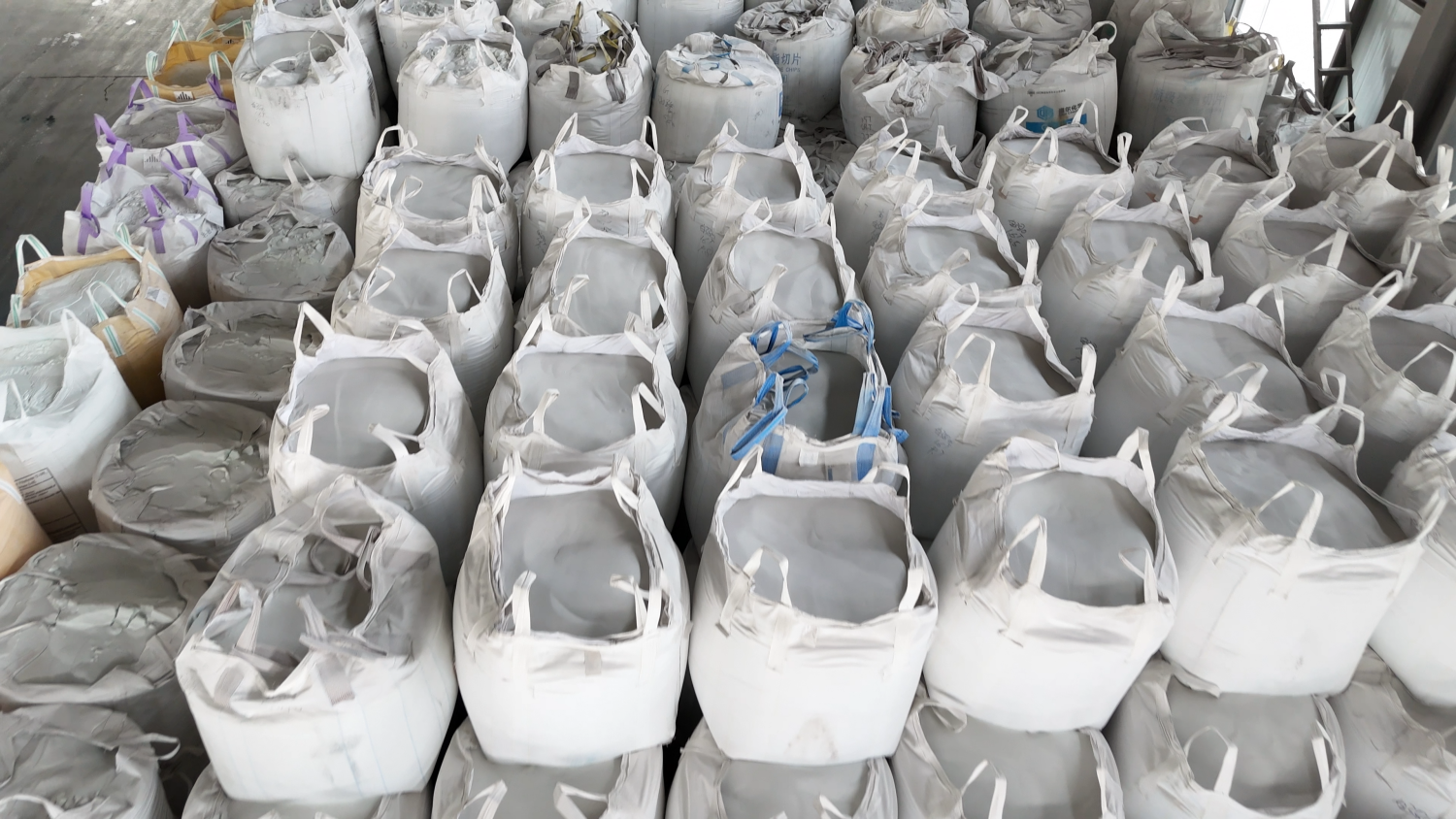
LangFang Dylan Technology Co., Ltd. (Dylantech) is a specialist glass bead manufacturer for the road safety industry, based in Langfang, China. The company operates four production bases in Liaoning, Shanxi, Hebei, and Henan, with more than 15 glass bead production lines and an annual output of 100,000 tons. Dylantech supplies reflective glass beads to customers in the EU, USA, Southeast Asia, the Middle East, and other markets, and supports OEM requirements.

Dylantech glass bead grades cover a wide range of standards for road marking projects.
Why Project-Specific Glass Bead Selection Matters
In road paving applications, glass beads perform a specific function: they create retroreflection by refracting light from vehicle headlights back toward the driver. The bead must have high roundness, a stable refractive index, and be made from eco-friendly recycled material to meet the demands of modern road marking projects. These requirements are not optional on high-traffic roads, where poor reflectivity is a safety risk.
High roundness helps the beads roll into a consistent layer after application, which improves the uniformity of retroreflection. The U.S. standard AASHTO M247 requires at least 70% roundness for glass beads used in traffic paint, making it a useful benchmark for quality even outside North America. A stable refractive index ensures that retroreflective performance remains predictable under different angles and weather conditions. Recycled glass content supports environmental requirements, which are becoming more common in public infrastructure tenders.
Selecting a grade that is too coarse or too fine for the marking material can cause poor embedment, rapid loss of beads, or reduced reflectivity. Selecting an excessively generic grade may meet neither the physical nor the contractual requirements of the job. Therefore, the first step in any procurement process is to define the project's technical boundaries.
Industry Context: A Growing Market
The global road marking glass beads market was valued at approximately USD 1.42 billion in 2025 and is expected to reach USD 2.31 billion by 2034. Asia Pacific leads with a 38.7% revenue share, largely due to highway expansion programs. China is the largest exporter of glass beads, contributing about 57.4% of global exports in 2024, with an export value of roughly USD 928 million. This concentration means that buyers around the world increasingly evaluate Chinese manufacturers as primary or alternative suppliers.
At the same time, the market is moving toward higher-performance beads. High refractive index glass beads with RI 1.9 or above are increasingly used in 'all weather' markings to improve visibility during wet-night conditions. For projects that do not require the highest possible RI, intermediate high-index grades such as RI 1.6 and RI 1.7 offer a practical specification.
Translating Project Conditions into a Glass Bead Specification
The selection process can be structured as a four-layer framework: standard, application method, gradation, and refractive index.
Layer 1: Identify the Applicable Standard
Road authorities and contract documents usually specify the governing standard. In the United States, AASHTO M247 is the standard specification for glass beads used in traffic paints. In Europe, EN 1423:2012 covers glass beads and antiskid aggregates for drop-on application. In the UK, BS 6088 sets out requirements for road marking beads. In Australia and New Zealand, AS/NZS grades are used. If no standard is named, use the national standard of the project country or request guidance from the client.
Layer 2: Define Application and Equipment
The application method determines how beads are placed. Drop-on glass beads are applied to the wet surface of paint or thermoplastic after marking. Pre-mixed glass beads are incorporated into the marking material before application. Equipment compatibility matters: road marking machines, sand blasting machines, and polishing equipment each create different surface preparation and bead-retention conditions. For example, the same bead may perform differently on a freshly painted line versus a blasted pavement surface.
Layer 3: Select the Gradation Range
Gradation refers to the particle size distribution of the beads. The chosen range must match the marking material and line thickness. Dylantech offers glass bead grades aligned to leading specifications. In its product range, the following gradations are available for standard and procurement grades:
| Grade / Standard | Available Gradation (µm) | Notes |
|---|---|---|
| AASHTO M247 Type 1 | 1180–150 | US traffic marking standard |
| AASHTO M247 Type 2 | 1180–180 | US traffic marking standard |
| AASHTO M247 Type 3 | 1700–710 | Coarser range |
| AASHTO M247 Type 4 | 2000–850 | Coarsest range |
| EN 1423 | 850–180 / 710–125 | European drop-on standard |
| EN 1424 | 1400–355 | European standard |
| BS 6088A | 1180–425 | UK standard |
| BS 6088B | 850–180 | UK standard |
| AS/NZS Type B | 850–75 | Australia / New Zealand |
| AS/NZS Type C | 1300–425 | Australia / New Zealand |
| AS/NZS Type D | 1700–710 | Australia / New Zealand |
| Type IA | 850–75 | General spec grade |
| Type IB | 300–63 | Finer general spec grade |
| Type IIA | 1000–180 | General spec grade |
| Type IIB | 600–75 | General spec grade |
| Type IIC | 1000–300 | General spec grade |
| OPSS1750 | 850–150 | Procurement specification |
| GB05 | 800–80 | Procurement specification |
| RI 1.6 | 1000–180 | High refractive index grade |
| RI 1.7 | 1180–180 | High refractive index grade |
Table: Dylantech glass bead grades and available gradation ranges based on standard product specifications.
When comparing grades, remember that the range shown refers to the product's usable sieve window, not the full distribution curve. Different standards also set limits on the percentage passing each sieve. This is why the supplier's quality control data is indispensable during evaluation.
Layer 4: Evaluate Refractive Index
Refractive index controls the bead's ability to return light to the driver. For wet-night visibility, higher-index beads are preferred. Dylantech offers Glass Beads RI 1.6 (1000–180 µm) and Glass Beads RI 1.7 (1180–180 µm) for projects that require improved retroreflectivity beyond conventional performance. The market trend is moving toward RI 1.9+ for all-weather markings; however, RI 1.6 and RI 1.7 remain widely used in road marking specifications where the highest cost-performance ratio is not required.
Step-by-Step Selection Process
For a new road marking project, follow these steps:
- Read the contract specification. Identify the governing standard and any mandatory tolerances. This will usually eliminate many product options immediately.
- Define the marking material and line type. Thermoplastic, paint, cold plastic, and two-component systems have different bead-retention properties.
- Choose the application method. Confirm whether the beads will be drop-on or pre-mixed. This influences the required gradation and the equipment on site.
- Select a standard grade. Match your standard and particle size requirement to a grade from the supplier's range. For example, a European highway project may specify EN 1423 in 850–180 µm; a U.S. contract may require AASHTO M247 Type 1 or Type 2.
- Check the refractive index. For sections with high wet-night accident risk, specify RI 1.6 or RI 1.7. For multi-lane highways in rainy climates, discuss with your supplier whether an enhanced high-index grade is more appropriate.
- Verify the supplier's quality control. Request roundness and particle size data, and confirm compliance documentation. Dylantech tests glass bead particle size, reflectivity, and wear resistance with instruments including CAMSIZER and X-2600, and holds ISO9001, CE, JIS, and KIS certifications.
Use Cases from Dylantech Projects
Across Dylantech's order history, road marking engineering companies and traffic safety manufacturers have ordered glass beads to increase the reflective refractive index of road performance. The consistent outcome has been stable performance and, in most cases, low wear.
- A customer ordered 1 ton of glass beads to improve reflective performance; after three years, the result was stable and the night effect was described as remarkable.
- A 20-ton order supported a customer's marking program for four years with stable performance and low wear.
- Larger continuous programs included orders of 56 tons, 72 tons, 108 tons, and 198 tons, each with a three-year service record of stable performance and low wear.
These cases show that glass bead selection is not only about initial material cost. The right grade supports long-term reflectivity and reduces the frequency of re-marking.
FAQ
How do I know which glass bead standard applies to my road marking project?
Identify the road authority and contract specification. In the United States, AASHTO M247 is the common standard for glass beads in traffic paint. In Europe, EN 1423:2012 covers drop-on glass beads and antiskid aggregates. In the UK, BS 6088 applies. In Australia and New Zealand, AS/NZS grades are used. When the project does not name a standard, use the national standard of the country where the road is located, or ask the client for the controlling specification.
Can Dylantech support custom project requirements?
Yes. Dylantech provides OEM production, with customization options such as voltage and logo, and product specifications note that custom color and size are available. The company's monthly capacity is 10,000 tons, and the MOQ is 1 ton, making it possible to start with a trial order before scaling up.
How can I get a sample to evaluate a glass bead grade?
To evaluate whether a specific grade matches your project conditions, contact Dylantech directly through the website or sales channels. The team can provide product information and support a sample request for the grade you need to test.
What is the lead time for a glass bead order?
Dylantech's standard lead time for OEM orders is 45 to 60 days. The MOQ is 1 ton. For large-scale road marking projects, confirm the production schedule and logistics plan with the sales team before placing the order.
Conclusion
Specifying the correct glass bead is one of the most direct ways to improve the safety and service life of a road marking project. The decision should be based on the applicable standard, the application method, the required gradation, and the refractive index target. Using a framework like the one in this article helps procurement teams avoid the risk of underperforming markings.
Dylantech, with its four production bases, annual output capacity of 100,000 tons, standard-compliant grades, and quality testing equipment, is positioned to support project-specific glass bead requirements. For further details, download the Dylantech corporate brochure or contact the team at dylan@xgbead.com / WhatsApp: +86 186-3166-3616.
Need a spec-matched quote or sample?
Contact Dylantech to discuss your road marking project requirements.
Have Questions or Need More Details?
Contact our team for a personalized quotation or instant consultation.
Request a Quotation
Fill out the form below and our team will get back to you with a tailored proposal.
WhatsApp Direct Chat
Prefer to chat in real-time? Message us on WhatsApp for instant assistance & quick answers.
- Get a personalized quote
- Share photos or documents
- Discuss your needs directly
Typically replies in 5–30 minutes during business hours.