
Matching Glass Beads to Road Marking Project Conditions
Matching Glass Beads to Road Marking Project Conditions
Buyer stage: Research → Evaluation · Industry: Road safety materials · Category: Glass beads for road marking
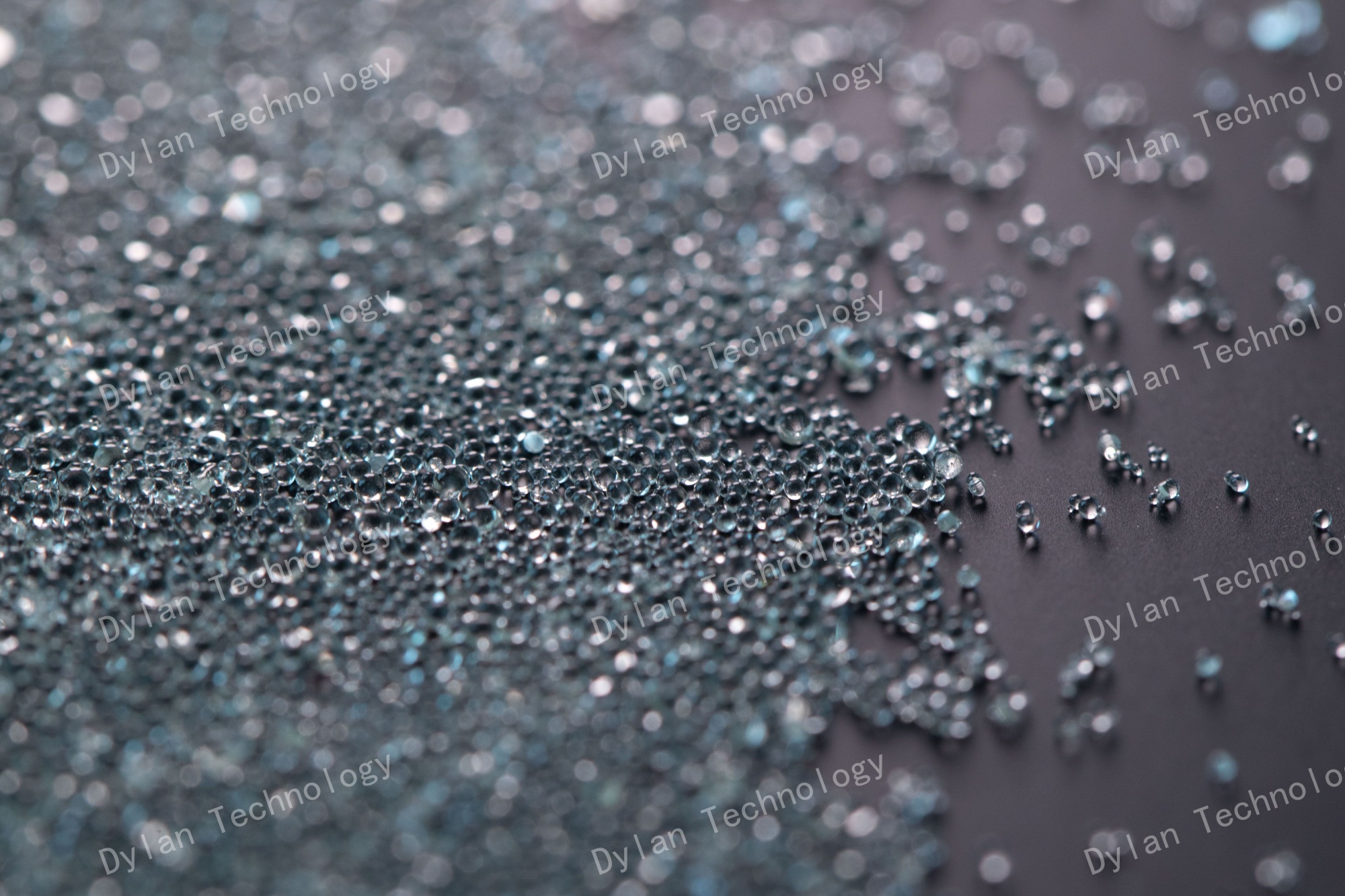
Glass beads are a functional component of road marking systems. They are embedded in or dropped onto thermoplastic, cold plastic, and paint markings to provide retro-reflectivity, which keeps lane lines visible to drivers in low-light and wet conditions. Matching glass beads to a specific road marking project requires more than checking a price list: it requires aligning particle size, refractive index, material type, and compliance standard with the application method, road condition, and local specification.
Dylantech (LangFang Dylan Technology Co., Ltd.) is a supplier of raw materials for the road safety industry, founded in 2004 and headquartered in LangFang, China, with production bases in Liaoning, Shanxi, Hebei and Henan provinces. The company operates more than 15 glass bead production lines with an annual output of 100,000 tons, and exports to markets including the United States, Europe, Brazil, Canada, Australia, New Zealand, and most countries in Southeast Asia. Its R&D team includes 20 engineers. This article explains how procurement teams, contractors, and traffic safety manufacturers can select the right glass beads for their project conditions, and where Dylantech's product range fits into that process.
Why Road Marking Projects Fail: The Specification Mismatch Problem
Road marking failures are often caused by specification mismatch rather than material quality. A bead that meets one standard may fail another; a bead sized for pre-mixed application can be displaced when used as drop-on; a low-refractive-index bead will not produce the night-time visibility required on high-speed corridors. Common consequences are low retro-reflectivity, early wear, loss of skid resistance, and remarking costs before the expected lifecycle is reached.
In road paving, glass beads must meet special requirements including high roundness, stable refractive index, and eco-friendly recycled material. Supporting equipment includes road marking machines, sand blasting machines, and polishing equipment. Procurement teams that do not map these requirements to a specific bead grade often discover the mismatch only after application.
Industry Background: Market Size, Standards, and Movement Toward Higher Index
According to Dataintelo, the global road marking glass beads market is valued at approximately USD 1.42 billion in 2025 and is projected to reach USD 2.31 billion by 2034. Asia Pacific accounted for 38.7% of the market revenue share in 2025, driven by massive highway expansion programs. China is the world's leading exporter of glass beads, representing approximately 57.4% of global exports in 2024, and its export value reached approximately USD 928 million in 2024, according to OEC (via UN Comtrade data). Potters Industries LLC, Swarco AG, and 3M Company are recognized as the top three global leaders in the glass beads for road marking sector (Dataintelo / Mordor Intelligence).
Three specification frameworks dominate procurement documents: AASHTO M247 (United States), EN 1423:2012 (Europe), and BS 6088 (United Kingdom). AASHTO M247 is the standard specification for glass beads used in traffic paints in the United States; it classifies beads into types and requires at least 70% roundness. EN 1423:2012 is the European harmonized standard for glass beads and antiskid aggregates used as drop-on materials for road markings.
Industry sources note that high refractive index glass beads (RI 1.9+) are increasingly used in "All weather" markings to enhance visibility during wet night conditions (Swarco / Mordor Intelligence). This trend is relevant to project planning: a standard road marking may be satisfied with lower-index beads, but a project with a wet-night visibility requirement may need a higher-index product. Market valuations vary by source scope: Dataintelo estimates USD 1.42 billion for road marking beads only, while other analysts value the total glass beads market at USD 2.8 billion (Cognitive Market Research).
Solution: A Project-Fit Framework for Glass Beads
Dylantech supplies glass beads for road marking across AASHTO M247, EN 1423, BS 6088, and AS/NZS specification frameworks. The product line includes AASHTO M247 Types 1–4, EN 1423 grades, BS 6088A and BS 6088B, AS/NZS Types B, C and D, OPSS 1750, GB05, and high-index grades RI 1.6 and RI 1.7.
At the project level, glass bead selection can be reduced to four variables: compliance standard, particle size distribution, refractive index, and application method.
1. Compliance Standard
Choose the standard that governs the road authority or contract. Dylantech covers the common frameworks:
- AASHTO M247 Type 1 (1180–150 μm), Type 2 (1180–180 μm), Type 3 (1700–710 μm), Type 4 (2000–850 μm)
- EN 1423 grades (850–180 μm and 710–125 μm), EN 1424 (1400–355 μm)
- BS 6088A (1180–425 μm) and BS 6088B (850–180 μm)
- AS/NZS Type B (850–75 μm), Type C (1300–425 μm), Type D (1700–710 μm)
- OPSS 1750 (850–150 μm) and GB05 (800–80 μm)
2. Particle Size Distribution
Particle size affects how deeply the bead embeds in the marking film and how long it remains effective. Drop-on beads are generally larger and applied onto the wet film surface; pre-mixed beads are smaller so they can be dispersed uniformly in the marking material. Dylantech's range spans from 2000–850 μm (AASHTO M247 Type 4) down to 300–63 μm (Type IB), covering both approaches.
3. Refractive Index
Refractive index (RI) determines how much light is returned to the driver. Dylantech offers glass beads RI 1.6 (1000–180 μm) and RI 1.7 (1180–180 μm). For projects that require high retro-reflectivity in wet-night conditions, higher-index beads are increasingly specified; the market trend points toward RI 1.9+ for all-weather markings.
4. Application Method and Project Environment
The application environment also matters. In road paving, glass beads must meet special requirements including high roundness, stable refractive index, and eco-friendly recycled material. Supporting equipment includes road marking machines, sand blasting machines, and polishing equipment. For thermoplastic road marking paint, the bead is typically applied with a drop-on dispenser mounted behind the screed; the selected grade must be compatible with the paint's film thickness and drying time.
For specialist requirements, Dylantech also supplies grinding glass beads for road marking and road safety, as well as sandblasting and decorative glass beads. Standard product parameters include a size range of 0.5 mm–20 mm, color options of transparent, opaque, or mixed, and surface finish options of smooth or matte, with custom color and size available.
Quality control is part of project-fit because bead consistency affects striping performance. Dylantech's laboratory is equipped with a full set of testing instruments, including CAMSIZER and X-2600. These devices enable strict detection of particle size, reflectivity, wear resistance, and other key indicators during production.

Step-by-Step: How to Match Glass Beads to Your Road Marking Project
A project-fit glass bead selection process can be broken into six steps.
- Define the governing specification. Identify the national or regional standard (AASHTO M247, EN 1423, BS 6088, AS/NZS, or OPSS) and the marking material (paint, thermoplastic, cold plastic). For projects outside these common frameworks, Dylantech's OEM capability supports custom grades.
- Determine the application method. Decide whether beads will be drop-on or pre-mixed. Select the particle size distribution that matches the film thickness and embedding depth of the marking machine.
- Set the retro-reflectivity target. Choose the refractive index based on the required night-time visibility. RI 1.6–1.7 is commonly used for standard road markings; RI 1.9+ is considered where wet-night performance is required.
- Check physical and environmental requirements. Verify high roundness, stable refractive index, and eco-friendly recycled material. Add anti-skid or colored beads where the project requires skid resistance or visual contrast.
- Evaluate supplier capability. Confirm the manufacturer can produce the exact grade, support OEM customization, meet the MOQ, and hold to a lead time that fits the project schedule. Dylantech's standard OEM MOQ is 1 ton with a lead time of 45–60 days and a monthly capacity of 10,000 tons. Quality control is conducted on 100% of batches, covering particle size, reflectivity, and wear resistance with instruments such as CAMSIZER and X-2600. The company holds ISO9001, CE, JIS, and KIS certifications, and has developed patented glass bead production equipment and a waste heat recovery system recognized by the China Energy Conservation Association. For extremely tight gradation bands, buyers should confirm that the specific distribution can be produced before committing to a large volume.
- Validate with a sample batch. Before full-volume order, test the bead in the actual marking machine and road conditions. Dylantech's documented project history includes 1-ton trial orders as well as repeat orders of up to 198 tons.
Use Cases: What Multi-Year Project Data Shows
Dylantech has recorded repeated supply to road marking engineering companies and traffic safety manufacturers. Documented order patterns range from 1 ton to 198 tons, with the reported application of increasing the reflective refractive index of road performance. Project results show stable retro-reflective performance over 3–4 years, with low wear highlighted in most cases. In a 1-ton trial, the night visibility effect was reported as remarkable; repeat orders of 56, 72, 108, and 198 tons maintained stability across three-year cycles.
Cooperative partners include global enterprises such as ENNIS, Geveko and Swarco, as well as local construction companies and road safety product manufacturers. These relationships indicate the supplier's ability to serve both international system manufacturers and regional contractors.

Comparison Table: Compliance Grades and Particle Size Distribution
The table below compares Dylantech's road marking glass bead grades by specification framework and particle size distribution (from Dylantech product specifications).
| Specification / Grade | Particle Size Distribution | Material |
|---|---|---|
| AASHTO M247 Type 1 | 1180–150 μm | Recycled glass |
| AASHTO M247 Type 2 | 1180–180 μm | Recycled glass |
| AASHTO M247 Type 3 | 1700–710 μm | Recycled glass |
| AASHTO M247 Type 4 | 2000–850 μm | Recycled glass |
| EN 1423 | 850–180 μm / 710–125 μm | Recycled glass |
| EN 1424 | 1400–355 μm | Recycled glass |
| BS 6088A | 1180–425 μm | Recycled glass |
| BS 6088B | 850–180 μm | Recycled glass |
| AS/NZS Type B | 850–75 μm | Recycled glass |
| AS/NZS Type C | 1300–425 μm | Recycled glass |
| AS/NZS Type D | 1700–710 μm | Recycled glass |
| OPSS 1750 | 850–150 μm | Recycled glass |
| GB05 | 800–80 μm | Recycled glass |
| Type IA | 850–75 μm | Recycled glass |
| Type IB | 300–63 μm | Recycled glass |
| Type IIA | 1000–180 μm | Recycled glass |
| Type IIB | 600–75 μm | Recycled glass |
| Type IIC | 1000–300 μm | Recycled glass |
| RI 1.6 | 1000–180 μm | Glass |
| RI 1.7 | 1180–180 μm | Glass |
Note: Dylantech's standard product parameters also include a broader size range (0.5 mm–20 mm), color options (transparent/opaque/mixed), and surface finish options (smooth/matte) with custom color and size available.
Frequently Asked Questions
Which standards apply to reflective glass beads for road marking?
AASHTO M247 is the standard specification for glass beads used in traffic paints in the United States; it classifies beads into types and requires at least 70% roundness. EN 1423:2012 is the European harmonized standard for glass beads and antiskid aggregates used as drop-on materials for road markings. BS 6088 is the British standard for road marking beads. Dylantech supplies grades that match AASHTO M247 Types 1–4, EN 1423, EN 1424, BS 6088A/B, AS/NZS Types B/C/D, and OPSS 1750.
What is the difference between drop-on and pre-mixed glass beads?
Drop-on glass beads are applied onto the surface of fresh marking material to provide immediate retro-reflectivity; pre-mixed glass beads are blended into the marking material so that new beads are exposed as the marking surface wears. The particle size distribution must be matched to the application method and film thickness. Dylantech's range covers coarse drop-on grades (e.g., AASHTO M247 Type 4 at 2000–850 μm) through finer grades (e.g., Type IB at 300–63 μm) to support both methods.
How do I choose the right refractive index for road marking beads?
Higher refractive index generally produces stronger retro-reflectivity. Dylantech offers RI 1.6 (1000–180 μm) and RI 1.7 (1180–180 μm). For projects with wet-night visibility requirements, the market trend is toward RI 1.9+ beads in "All weather" markings. The right choice depends on the project's retro-reflectivity target, road speed, and local specification.
What is the typical MOQ and lead time for custom glass beads?
Dylantech's standard OEM MOQ is 1 ton, with a lead time of 45–60 days and a monthly production capacity of 10,000 tons. OEM customization includes voltage and logo. The company's annual output capacity is 100,000 tons across four production bases.
Can I request samples before ordering?
Yes. Documented project history includes a 1-ton trial order used to evaluate night-time visibility before larger commitments. For specification-critical projects, a sample batch is the recommended first step. Contact Dylantech to request a sample and verify the bead against your marking machine and local standard.
How do I start a project-specific glass bead evaluation with Dylantech?
Start by sending your standard, particle size, refractive index, and application method to Dylantech. The company provides OEM production, 100% batch testing, remote after-sales support, and a documented record of multi-year supply to road marking engineering companies and traffic safety manufacturers. To request a quote, sample, or catalog, contact Dylan at dylan@xgbead.com or +86 186-3166-3616.
Request the Dylantech corporate brochure or a project-specific quotation.
Email: dylan@xgbead.com · WhatsApp/Tel: +86 186-3166-3616
Website: www.dylantech.com · Download Corporate Brochure (PDF)
Conclusion
Selecting glass beads for road marking is a specification-driven decision. Define the governing standard, match the particle size and refractive index to the application method, validate with samples, and choose a supplier with the production capacity and quality control to deliver consistently. Dylantech's product range covers AASHTO M247, EN 1423, BS 6088, AS/NZS, OPSS and high-index grades, with factory capacity and documented multi-year project supply to support road marking contractors and traffic safety manufacturers.
Have Questions or Need More Details?
Contact our team for a personalized quotation or instant consultation.
Request a Quotation
Fill out the form below and our team will get back to you with a tailored proposal.
WhatsApp Direct Chat
Prefer to chat in real-time? Message us on WhatsApp for instant assistance & quick answers.
- Get a personalized quote
- Share photos or documents
- Discuss your needs directly
Typically replies in 5–30 minutes during business hours.