
Glass Beads 101: Reflective Road Marking Beads Explained
Glass Beads 101: Reflective Road Marking Beads Explained
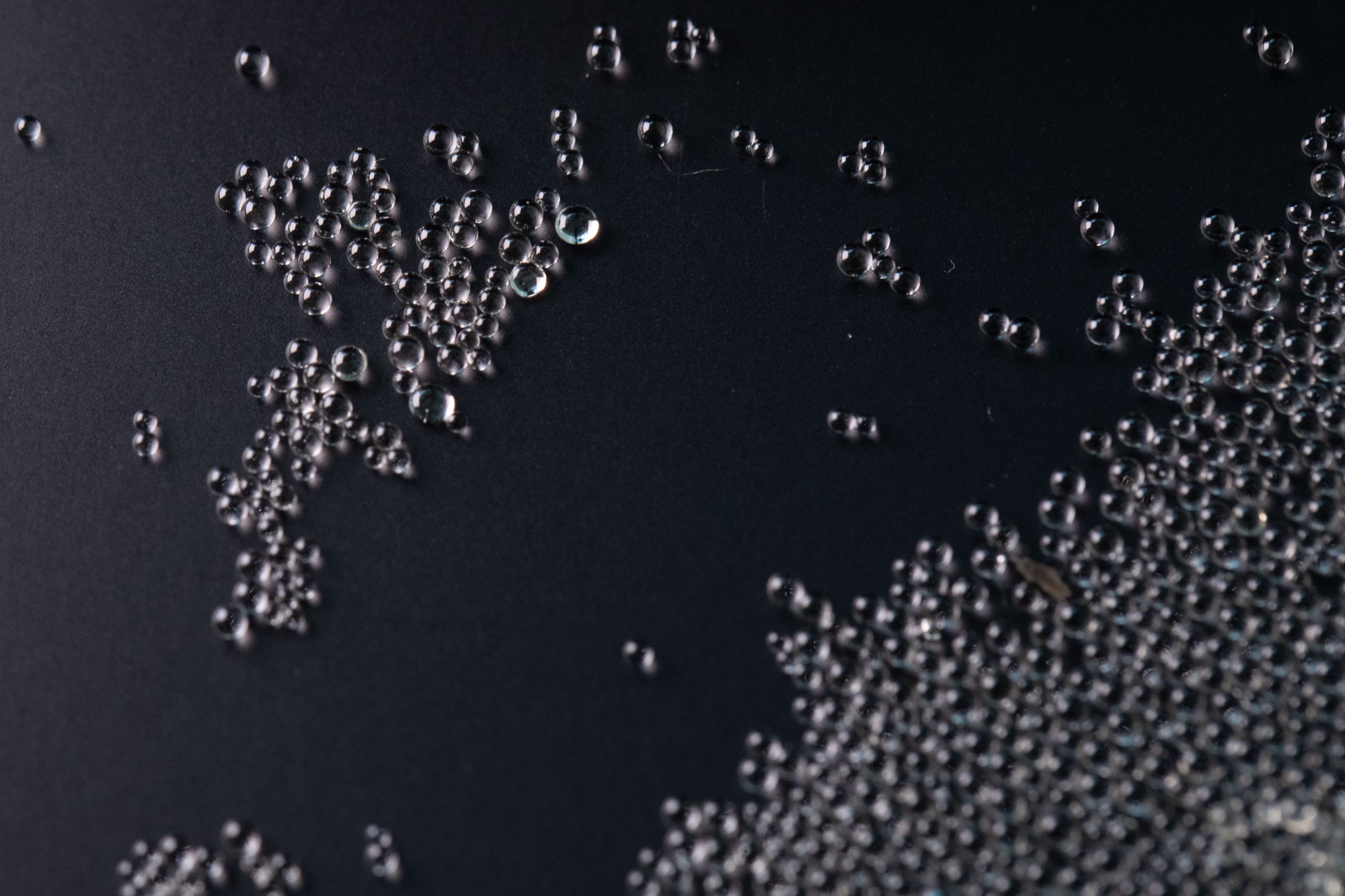
Glass beads are small spherical glass products used in road marking and road safety applications. In practical terms, they are the optical component that makes pavement marking lines visible to drivers at night. Lighting engineers and road marking contractors also call them reflective glass beads, traffic marking glass beads, reflective glass beads for road marking, or microesferas de vidrio. This guide is designed for buyers and engineers in the awareness and research stage: it explains what glass beads are, how they are specified, and what to look for in a supplier.

Why Glass Beads Matter: The Road Marking Visibility Problem
Road markings must be visible under low light and rainy conditions. Plain paint or thermoplastic material can lose visible contrast quickly, especially as the surface wears. Glass beads solve this problem by acting as tiny lenses. Headlight light enters each bead, is refracted, and is returned toward the driver. This effect is called retroreflection, and it is why road marking beads are often described as reflective glass beads.
The performance of a road marking bead depends on several factors: roundness, refractive index, surface finish, and particle size distribution. AASHTO M247, the standard specification for glass beads used in traffic paint in the United States, requires at least 70% roundness. When standard beads become covered by a film of water, their performance can drop; this is why high refractive index glass beads are increasingly used in all-weather markings to preserve wet-night visibility.
Industry Background: A Global Road Safety Material
The road marking glass beads market is a substantial and growing segment. Market estimates put the global road marking glass beads market at approximately USD 1.42 billion in 2025 and project it to reach USD 2.31 billion by 2034. Asia Pacific accounted for 38.7% of revenue in 2025, supported by large-scale highway development. China is the world's leading exporter of glass beads, accounting for around 57.4% of global export value in 2024, with exports valued at about USD 928 million. The UAE and India were among the main destination markets.
For a buyer, a growing market means more suppliers and more product options. It also means specification discipline matters. Global market analyses identify Potters Industries LLC, Swarco AG, and 3M Company as recognized names in the glass beads for road marking sector. Buyers should compare products by standard, gradation, refractive index, and quality control rather than by product name alone.
Detailed Solution: What Reflective Glass Beads Are
Dylantech (DYLAN TECHNOLOGY CO.,LTD.) is a road safety raw material supplier established in 2004 and based in LangFang, China. It focuses on glass beads and exports 95% of its production to major markets including the EU, USA, Southeast Asia, and the Middle East. This is useful context because glass beads are not a single commodity: they are produced in different materials, sizes, colors, and finishes.
Glass beads for road marking are available in a size range of 0.5 mm to 20 mm. Color options include transparent, opaque, and mixed color. Surface finish options include smooth and matte. Custom color and size are available on request. The wider product range includes grinding glass beads, glass beads RI 1.6, glass beads RI 1.7, sandblasting glass beads, and decorative glass beads, with some products made from recycled glass.

The road marking product family at Dylantech includes AASHTO M247 Type 1-4, EN 1423, EN 1424, BS 6088A/B, AS/NZS Type B/C/D, Type IA/IB/IIA/IIB/IIC, OPSS1750, GB05, RI 1.6, and RI 1.7. A buyer can use these model names to connect a product to the standard required in a tender. The range also includes grinding, sandblasting, and decorative glass beads, which is relevant for companies that buy glass beads for multiple applications.
Capacity and quality control are important clues during early-stage evaluation. Dylantech operates four production bases in Liaoning, Shanxi, Hebei, and Henan provinces, with an annual production capacity of 100,000 tons. The company employs around 300 people, including 20 engineers in the R&D team, and its laboratory is equipped with CAMSIZER and X-2600 testing instruments. These instruments support inspection of particle size, reflectivity, and wear resistance during production. For road marking, the grading and roundness of every batch matter more than marketing descriptions.
Step-by-Step Selection Framework for Glass Beads
For buyers in the research stage, the following framework can reduce specification risk.
1. Define the application method
Identify whether beads will be applied as drop-on glass beads or pre-mixed glass beads. Drop-on beads are applied onto the surface of fresh marking material; pre-mixed beads are blended into the material before application. Both methods are common in thermoplastic road marking paint systems, but the ideal gradation and dosage may differ.
2. Select the governing standard
Use the standard that applies in the project location. Common references include AASHTO M247 in the United States, EN 1423 and EN 1424 in Europe, BS 6088 in the United Kingdom, and AS/NZS standards in Australia and New Zealand.
3. Choose the refractive index
If the specification requires higher retroreflectivity, products such as RI 1.6 and RI 1.7 glass beads are available. The market trend for all-weather markings also points to high refractive index glass beads to improve visibility in wet-night conditions.
4. Confirm particle size distribution
Particle size is expressed in micrometers. Examples include 1180-150 μm for AASHTO M247 Type 1, 850-180 μm for BS 6088B, and 710-125 μm for EN 1423. The project specification should identify the required range.
5. Verify material, color, and finish
Many road marking glass beads are made from recycled glass. Confirm whether transparent, opaque, or mixed color is needed and whether surface finish should be smooth or matte. Custom color and size can usually be requested.
6. Evaluate quality control and certifications
A manufacturer should be able to test particle size, reflectivity, and wear resistance during production. International certifications can also help buyers shortlist suppliers; Dylantech has obtained ISO9001, CE, JIS, and KIS certifications, according to its corporate profile.
7. Request a sample and a quote
Compare suppliers using the same model, standard, and gradation. A sample request should include the product type, particle size, quantity, application method, and destination, so the quotation is comparable.
Use Cases Across Road Marking and Adjacent Applications
Road marking and pavement marking
Reflective glass beads are the main application of road marking beads. They are used in pavement marking systems, including thermoplastic road marking paint, to provide night-time retroreflection and reinforce traffic safety.
Wet-night and all-weather visibility
High refractive index glass beads improve performance when markings are wet. Market trend data shows that RI 1.9+ beads are increasingly used in all-weather markings, while products such as RI 1.6 and RI 1.7 provide higher-index options in Dylantech's range.
Anti-skid and drop-on road safety materials
EN 1423:2012, the European harmonized standard, covers glass beads and antiskid aggregates used as drop-on materials for road markings. This means glass beads are part of a broader road safety material system, not only a reflective additive.
Custom color, decorative, and adjacent industrial products
Glass beads also serve decorative, polishing, and sandblasting functions. Dylantech's range includes colored and decorative glass beads, grinding glass beads, and sandblasting glass beads. Custom colors and sizes make it possible to match project or product design requirements.
Comparison Table: Glass Bead Standards and Typical Gradations
The table below summarizes common road marking glass bead models and their typical particle size ranges. It is intended as a research reference; final selection should follow the project specification.
| Standard / Model | Typical Gradation | Material | Typical Application |
|---|---|---|---|
| AASHTO M247 Type 1 | 1180-150 μm | Recycled glass | Road marking / road safety |
| AASHTO M247 Type 2 | 1180-180 μm | Recycled glass | Road marking / road safety |
| AASHTO M247 Type 3 | 1700-710 μm | Recycled glass | Road marking / road safety |
| AASHTO M247 Type 4 | 2000-850 μm | Recycled glass | Road marking / road safety |
| EN 1423 | 850-180 μm and 710-125 μm | Recycled glass | European drop-on road marking |
| EN 1424 | 1400-355 μm | Recycled glass | Road marking beads |
| BS 6088A | 1180-425 μm | Recycled glass | Road marking beads |
| BS 6088B | 850-180 μm | Recycled glass | Road marking beads |
| AS/NZS Type B | 850-75 μm | Recycled glass | Road marking / road safety |
| AS/NZS Type C | 1300-425 μm | Recycled glass | Road marking / road safety |
| AS/NZS Type D | 1700-710 μm | Recycled glass | Road marking / road safety |
| Type IA | 850-75 μm | Recycled glass | Road marking / road safety |
| Type IB | 300-63 μm | Recycled glass | Road marking / road safety |
| Type IIA | 1000-180 μm | Recycled glass | Road marking / road safety |
| Type IIB | 600-75 μm | Recycled glass | Road marking / road safety |
| Type IIC | 1000-300 μm | Recycled glass | Road marking / road safety |
| OPSS1750 | 850-150 μm | Recycled glass | Road marking / road safety |
| GB05 | 800-80 μm | Recycled glass | Road marking / road safety |
| RI 1.6 | 1000-180 μm | Glass | Higher retroreflection road marking |
| RI 1.7 | 1180-180 μm | Glass | High-index road marking / road safety |

Frequently Asked Questions
Are Dylantech glass beads compliant with AASHTO M247, EN 1423, and BS 6088?
Dylantech supplies glass bead models across major international specifications, including AASHTO M247 Types 1-4, EN 1423, EN 1424, BS 6088A/B, AS/NZS types, and other road marking classifications. The company has also obtained ISO9001, CE, JIS, and KIS certifications, according to its corporate profile. Buyers should confirm the exact standard, gradation, and project acceptance requirements before ordering.
What glass bead types and customization options can a manufacturer provide?
Dylantech supplies road marking glass beads, reflective glass beads, grinding glass beads, sandblasting glass beads, and decorative glass beads. Road marking models include AASHTO M247 Type 1-4, EN 1423, EN 1424, BS 6088A/B, AS/NZS Type B/C/D, Type IA/IB/IIA/IIB/IIC, OPSS1750, GB05, RI 1.6, and RI 1.7. Products can be made from glass or recycled glass, in sizes from 0.5 mm to 20 mm, with transparent, opaque, or mixed colors and smooth or matte finishes. Custom colors and sizes are available on request.
How should I budget for glass beads procurement?
Budget depends on specification. Key cost factors include the governing standard, product model, refractive index, particle size range, color, surface finish, quantity, packaging, and destination. To get a meaningful estimate, send the product model and order details to the supplier. Dylantech exports to the EU, USA, Southeast Asia, and the Middle East and can provide a tailored quotation based on the required specification.
Can I request glass bead samples before placing a bulk order?
Buyers should request a representative sample before committing to a large order. Define the product model, target gradation, color, surface finish, and application method so the sample matches the project requirement. Contact Dylantech directly at dylan@xgbead.com or WhatsApp +86 186-3166-3616 to arrange the product details.
What lead time should I expect for a bulk glass bead order?
Lead time depends on the selected grade, production schedule, packaging, and destination. Dylantech operates four production bases in Liaoning, Shanxi, Hebei, and Henan Provinces and has an annual production capacity of 100,000 tons, so it is positioned to support large road marking material programs. To get a lead time estimate, send the quantity, specification, and destination port to the sales team.
Conclusion and Next Step
Glass beads are a functional product used in road marking, road safety, and adjacent applications. The most reliable way to evaluate them is to start with the standard, then compare product models by gradation, refractive index, material, color, finish, and supplier quality control. Dylantech offers a complete glass bead range, production capacity, and testing equipment that can support buyers moving from awareness to evaluation.
Next step: Download the Corporate Brochure or request a quote and sample by emailing dylan@xgbead.com. You can also contact the sales team via WhatsApp at +86 186-3166-3616 or visit www.dylantech.com.

Have Questions or Need More Details?
Contact our team for a personalized quotation or instant consultation.
Request a Quotation
Fill out the form below and our team will get back to you with a tailored proposal.
WhatsApp Direct Chat
Prefer to chat in real-time? Message us on WhatsApp for instant assistance & quick answers.
- Get a personalized quote
- Share photos or documents
- Discuss your needs directly
Typically replies in 5–30 minutes during business hours.