
Evaluating Glass Beads for Road Marking: Standards, RI & Performance in 2026
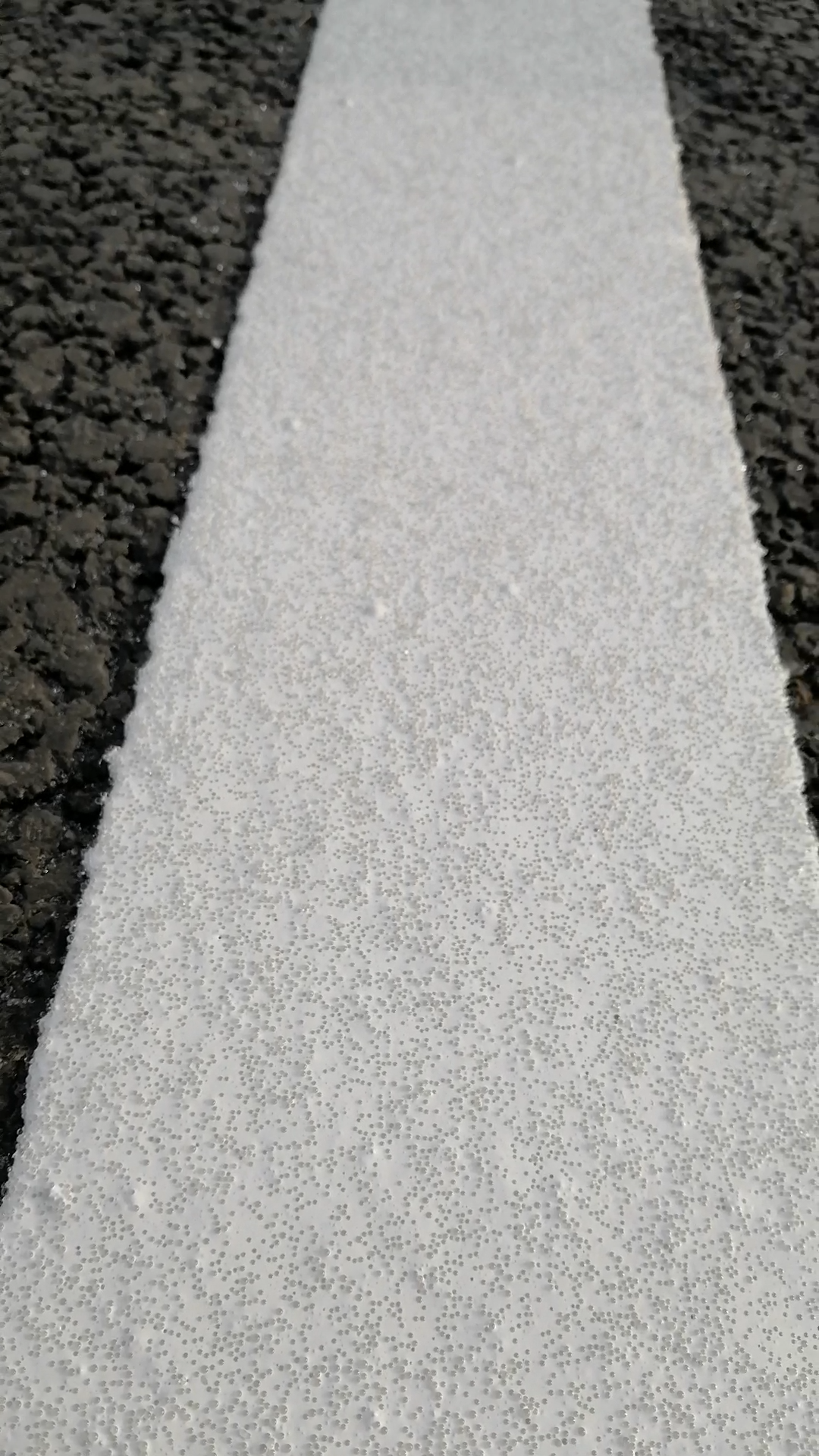
Evaluating Glass Beads for Road Marking: Standards, RI & Performance in 2026
Procurement professionals evaluating reflective glass beads for road marking face a complex landscape of international standards, refractive index options, and field performance claims. This article provides a structured evaluation framework based on verified project data and compliance specifications, helping you select the right glass beads for your next road safety project.
Problem Definition
When evaluating glass beads for road marking, buyers must balance compliance with standards such as AASHTO M247 or EN 1423, optical performance (refractive index), wear resistance, and supply reliability. Without a clear evaluation framework, projects risk selecting beads that fail to meet retroreflectivity requirements or degrade prematurely.
Industry Background
According to Dataintelo, the global road marking glass beads market is valued at approximately USD 1.42 billion in 2025 and is projected to reach USD 2.31 billion by 2034. Asia Pacific dominates with 38.7% revenue share. China, led by manufacturers like LangFang Dylan Technology Co., Ltd (Dylantech), accounts for 57.4% of global glass beads exports, with total export value of USD 928 million in 2024. Major global competitors include Potters Industries, Swarco AG, and 3M Company.
Detailed Solution: Dylantech's Glass Beads Portfolio
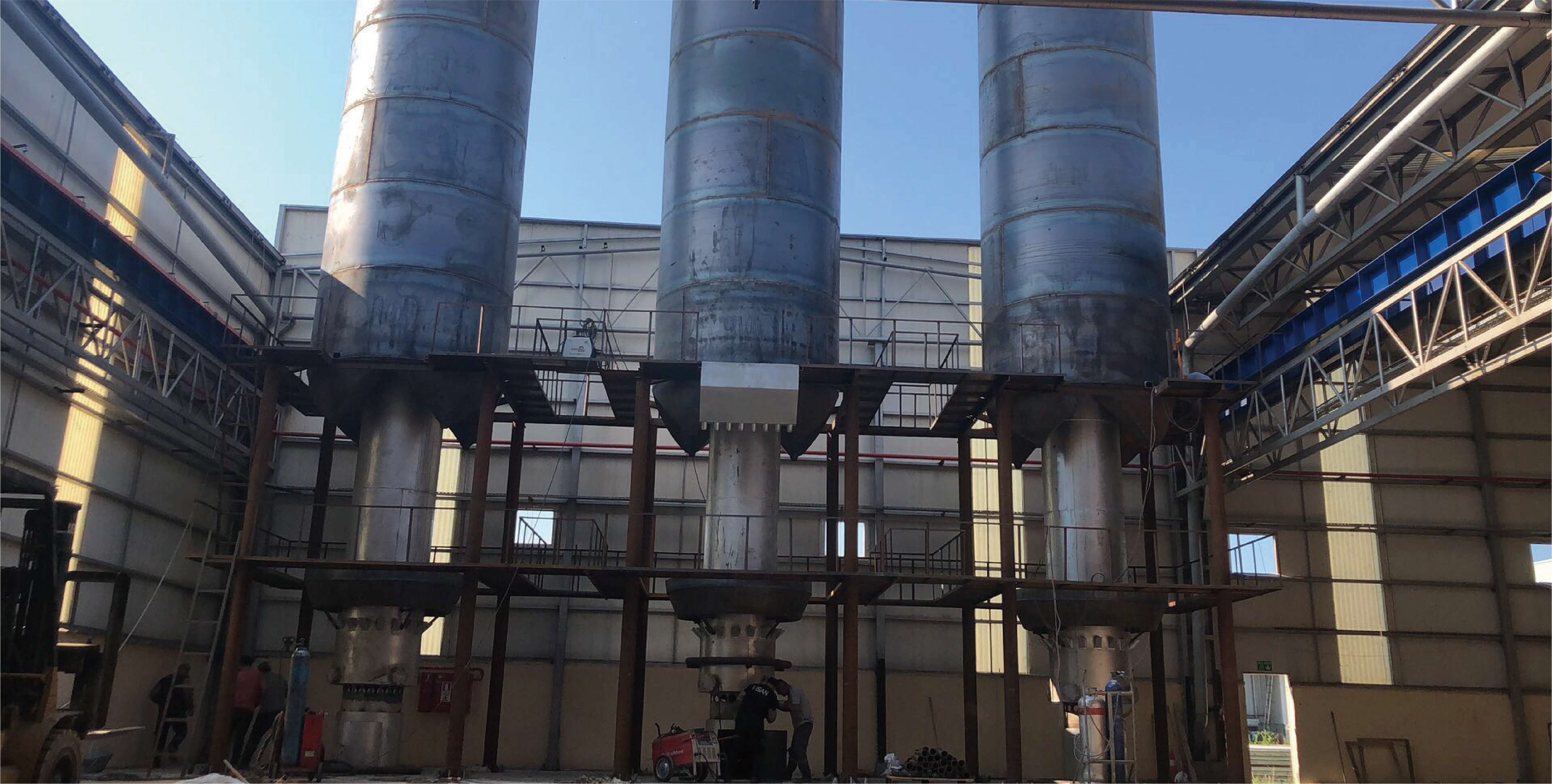
Dylantech is a professional supplier of glass beads for the road safety industry, founded in 2004 with a 10,000 m² factory and 300 employees. The company operates four production bases across China, with 15+ advanced production lines achieving an annual output of 100,000 tons. Dylantech has developed patented glass bead production equipment and a waste heat recovery system recognized by the China Energy Conservation Association. Export ratio exceeds 95%, serving markets including EU, USA, Southeast Asia, and the Middle East.
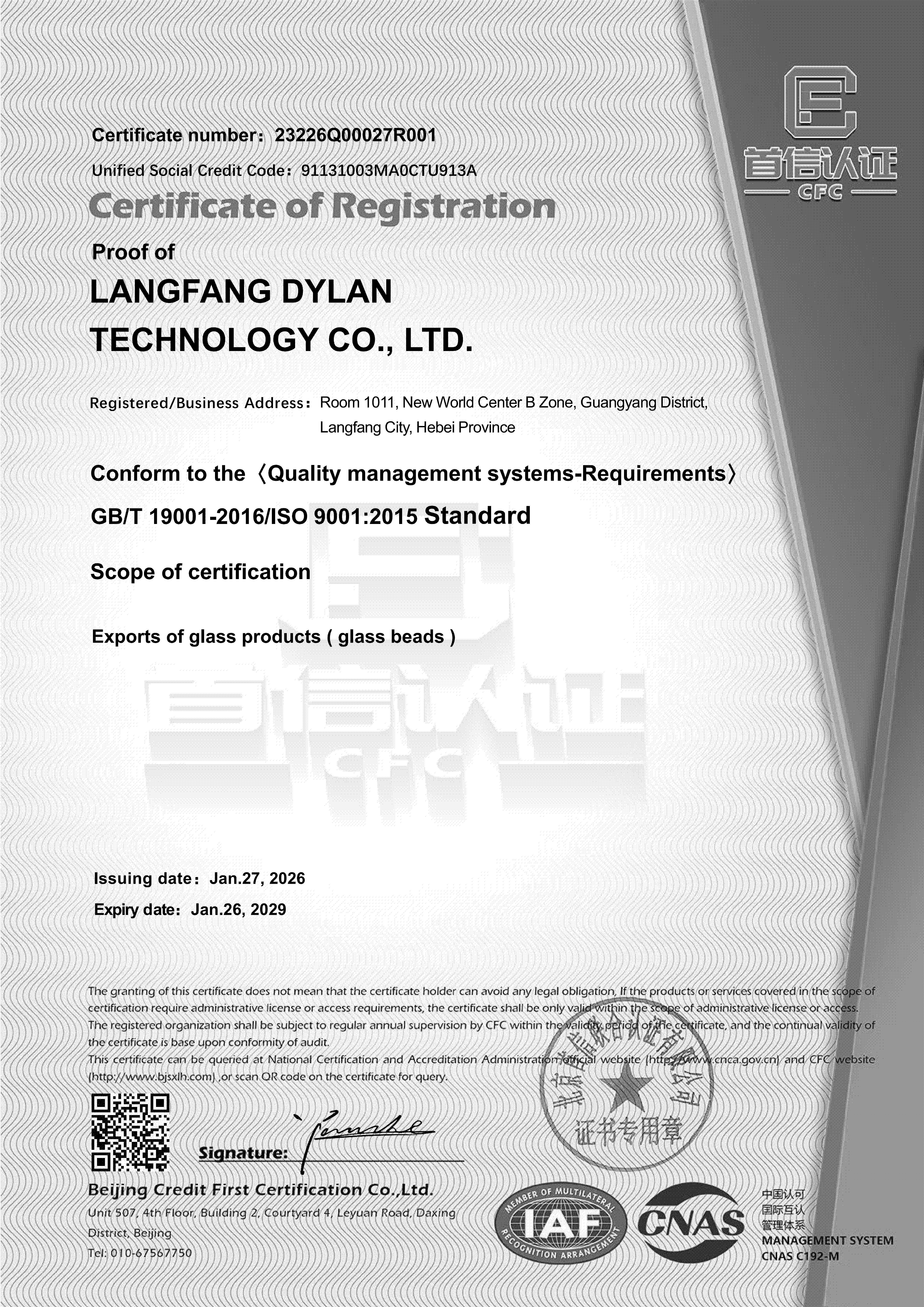
The company's glass bead products cover multiple international standards: AASHTO M247 Types 1–4, EN 1423, EN 1424, BS 6088A/B, AS/NZS Types B/C/D, and others. Refractive index options include RI 1.5 (standard), RI 1.6, and RI 1.7 (high refractive index). All road marking beads are manufactured from recycled glass and undergo 100% quality testing using laboratory equipment such as CAMSIZER and X-2600.
Step-by-Step Evaluation Breakdown
- Identify your applicable standard: North American projects typically require AASHTO M247 (Type 1: 1180–150µm; Type 2: 1180–180µm; Type 3: 1700–710µm; Type 4: 2000–850µm). European projects follow EN 1423 (850–180µm or 710–125µm) or EN 1424 (1400–355µm). UK may specify BS 6088A (1180–425µm) or BS 6088B (850–180µm). Australia uses AS/NZS Types B, C, D.
- Select refractive index: Standard RI 1.5 beads are cost-effective. High refractive index RI 1.6 and RI 1.7 provide enhanced retroreflectivity, particularly important for wet-night visibility. Industry trends show increasing adoption of RI 1.9+ for all-weather markings.
- Evaluate wear resistance: Field validation over 3–4 years on global projects (20-ton to 198-ton scales) consistently shows low wear and stable performance with Dylantech beads.
- Check supplier capability: Dylantech offers OEM customization (voltage/logo), monthly capacity 10,000 tons, lead time 45–60 days, MOQ 1 ton, and 100% quality control.
Use Cases
Dylantech's glass beads have been deployed in multiple road marking projects worldwide. For example:
- 198 tons of high refractive index glass beads (RI 1.7) supplied to a global road marking engineering company, achieving 3 years stable performance with low wear.
- 108 tons of BS 6088A beads used for increasing reflective refractive index, showing 3 years stable results.
- 72 tons of EN 1423 beads (RI 1.6) used by traffic safety manufacturers, maintaining low wear over 3 years.
- 56 tons of standard RI beads with 3 years stable performance and low wear.
All projects demonstrated consistent durability and retroreflectivity improvement, validated over 3–4 year periods.

Comparison: Standard vs. High Refractive Index Glass Beads
| Property | Standard RI (1.5) | High RI (1.6) | High RI (1.7) |
|---|---|---|---|
| Refractive Index | ~1.5 | ~1.6 | ~1.7 |
| Retroreflectivity | Good | Better | Best |
| Typical Standards | AASHTO M247, BS6088, EN1423 | AASHTO M247, EN1423 | AASHTO M247, EN1423 |
| Gradation Example | 1180–150µm (M247 Type 1) | 1000–180µm (RI 1.6 model) | 1180–180µm (RI 1.7 model) |
| Material | Recycled glass | Glass | Glass |
| Wear Performance (field data) | Low wear, 3+ years stable | Low wear, 3+ years stable | Low wear, 3+ years stable |
Frequently Asked Questions
Q: What standards must glass beads for road marking comply with?
A: Common standards include AASHTO M247 (USA), EN 1423 and EN 1424 (Europe), BS 6088 (UK), and AS/NZS (Australia). Each standard specifies particle size distribution, roundness (≥70% per AASHTO M247), and refractive index requirements. Dylantech produces glass beads certified to all these standards.
Q: How does refractive index affect road marking performance?
A: Higher refractive index (RI) improves retroreflectivity, meaning more light is reflected back to the driver's eyes. Standard RI 1.5 beads work adequately in dry conditions. High RI beads (1.6, 1.7, and above) significantly enhance wet-night visibility and are increasingly used for all-weather markings.
Q: What is the typical MOQ and lead time for Dylantech custom glass beads?
A: Minimum order quantity is 1 ton. Lead time ranges from 45 to 60 days. Dylantech offers OEM customization for voltage and logo, with monthly capacity of 10,000 tons to handle large projects.
Q: Can I get a sample to test before placing an order?
A: Yes, sample requests are welcome. Contact Dylantech at dylan@xgbead.com or WhatsApp +86 186-3166-3616 to arrange a sample for your specific standard and refractive index requirements.
Q: How long does Dylantech's glass beads last in the field?
A: Field projects ranging from 1 to 198 tons have demonstrated stable performance for 3 to 4 years with low wear characteristics. Dylantech's quality control includes 100% testing using CAMSIZER and X-2600 equipment to ensure consistency.

Evaluate Dylantech glass beads for your next project.
Download the corporate brochure for full product specifications: Dylantech Corporate Brochure
Contact: Dylan | Email: dylan@xgbead.com | Phone/WhatsApp: +86 186-3166-3616
Have Questions or Need More Details?
Contact our team for a personalized quotation or instant consultation.
Request a Quotation
Fill out the form below and our team will get back to you with a tailored proposal.
WhatsApp Direct Chat
Prefer to chat in real-time? Message us on WhatsApp for instant assistance & quick answers.
- Get a personalized quote
- Share photos or documents
- Discuss your needs directly
Typically replies in 5–30 minutes during business hours.