
Certified Glass Beads Supplier: AASHTO M247 & EN 1423 Compliance Guide
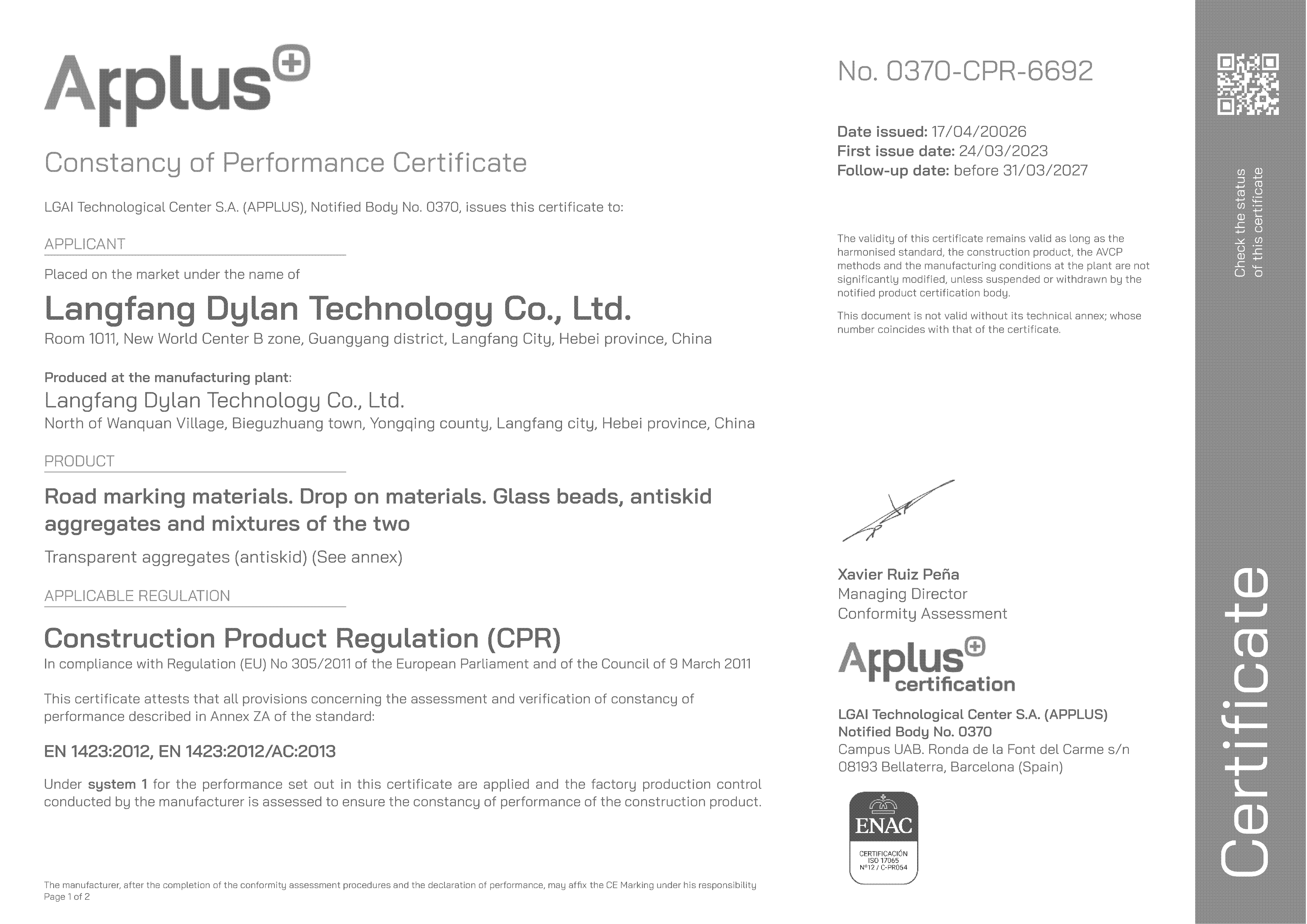
Certified Glass Beads Supplier: AASHTO M247 & EN 1423 Compliance Guide
Reflective glass beads are the critical component that transforms ordinary road markings into lifesaving retroreflective guides. For highway contractors, traffic safety agencies and road marking manufacturers, sourcing glass beads that meet international standards such as AASHTO M247, EN 1423, or BS 6088 is not optional—it is a contractual and safety requirement. Yet the market is flooded with uncertified or inconsistent products that can lead to project failure, retroreflectivity penalties and safety hazards. This guide explains exactly how to identify, verify and partner with a certified glass beads supplier that meets the strictest global road marking standards.
The Real Cost of Uncertified Glass Beads
When a road marking project uses glass beads that do not conform to the specified standard, the consequences ripple through the entire lifecycle:
- Failed acceptance tests – Retroreflectivity readings below the mandated minimum force costly rework.
- Premature wear – Beads with low roundness or improper coating shed quickly, reducing marking life by 20–30%.
- Safety liability – Poor nighttime visibility increases accident risk, especially in wet conditions.
- Brand damage – Contractors and suppliers lose credibility with government clients.
According to industry data, up to 15% of imported glass beads in some regions fail to meet the declared sieve specifications. This is why procurement teams must move beyond price comparisons and focus on verifiable certification and production quality.
Understanding the Global Standard Ecosystem
Different regions enforce distinct technical standards for reflective glass beads. The table below summarizes the most commonly referenced specifications:
| Standard | Region / Application | Key Particle Size Scope (example) |
|---|---|---|
| AASHTO M247 Type 1 | USA – Drop-on beads for traffic paint & thermoplastic | 1180–150 μm |
| AASHTO M247 Type 2 | USA – Pre-mix beads | 1180–180 μm |
| AASHTO M247 Type 3 | USA – Larger drop-on beads for higher retroreflectivity | 1700–710 μm |
| AASHTO M247 Type 4 | USA – Extra-large beads for durable markings | 2000–850 μm |
| EN 1423:2012 | Europe – Drop-on beads for road markings | 850–180 μm / 710–125 μm |
| EN 1424:2012 | Europe – Pre-mix beads for road markings | 1400–355 μm |
| BS 6088:2011 | UK – Beads for road marking compounds | 1180–425 μm (A) / 850–180 μm (B) |
| AS/NZS 2009 | Australia / New Zealand – Types B, C, D | 850–75 μm (B) / 1300–425 μm (C) / 1700–710 μm (D) |
Each standard defines not only particle size distribution but also refractive index, roundness, surface treatment and resistance to weathering. A truly certified glass beads supplier must be able to demonstrate compliance across all these dimensions.
Case in Point: DYLAN TECHNOLOGY – A Verified Certified Supplier
LangFang Dylan Technology Co., Ltd. (brand dylantech) has been a dedicated glass beads manufacturer since 2004. With four production bases in China, an annual output of 100,000 tons and more than 15 advanced production lines, Dylan Tech supplies reflective glass beads to customers in over 50 countries, including major European and American contractors such as Ennis, Geveko and Swarco.

Certifications That Matter
- ISO 9001:2015 – Certificate number 23226Q00027R001, issued by CFC, valid for EU and US markets. The quality management system covers the entire export of glass bead products under GB/T 19001‑2016/ISO 9001:2015.
- CE marking – Products comply with EN 1423 and EN 1424 standards for European road marking.
- AASHTO M247 compliance – Full range of Type 1 through Type 4 beads with documented sieve analysis.
- BS 6088, AS/NZS 2009, OPSS 1750 – Additional certifications for UK, Australia and Ontario (Canada) markets.
- JIS, KIS – Japanese and Korean industrial standards for Asian road projects.
Dylan Tech’s in-house laboratory is equipped with CAMSIZER, X‑2600 and other advanced instruments to perform 100% batch testing on particle size, roundness, refractive index and wear resistance. Every shipment is accompanied by a pre-shipment test report.
Step-by-Step: How to Select a Certified Glass Beads Supplier
Step 1 – Define Your Required Standard
Identify the exact standard your project or contract mandates. For example, a U.S. DOT project may require AASHTO M247 Type 1 beads with a sieve range of 1180–150 μm. A European motorway may specify EN 1423 with 850–180 μm. Write the standard and type into your RFQ.
Step 2 – Request Supplier Certificates
Ask for copies of ISO 9001, CE declaration, and any third-party test reports matching your standard. For example, Dylan Tech can provide its ISO 9001 certificate number 23226Q00027R001 along with test reports for AASHTO M247 Type 1 or EN 1423. Verify the certificate’s validity through the issuing body (e.g., CFC).
Step 3 – Verify Physical Test Data
A reliable supplier will share CAMSIZER or equivalent sieve analysis results. Key parameters to check:
- Particle size distribution – Must fall within the declared scope (e.g., 1180–150 μm with ≤5% oversize and ≤10% undersize).
- Roundness – Sphericity ≥85% for optimal retroreflectivity.
- Refractive index – ≥1.5 for standard beads, ≥1.6 or 1.7 for high-index applications.
- Coating uniformity – For moisture-resistant or anti-skid treatments.
Step 4 – Audit Production Capability
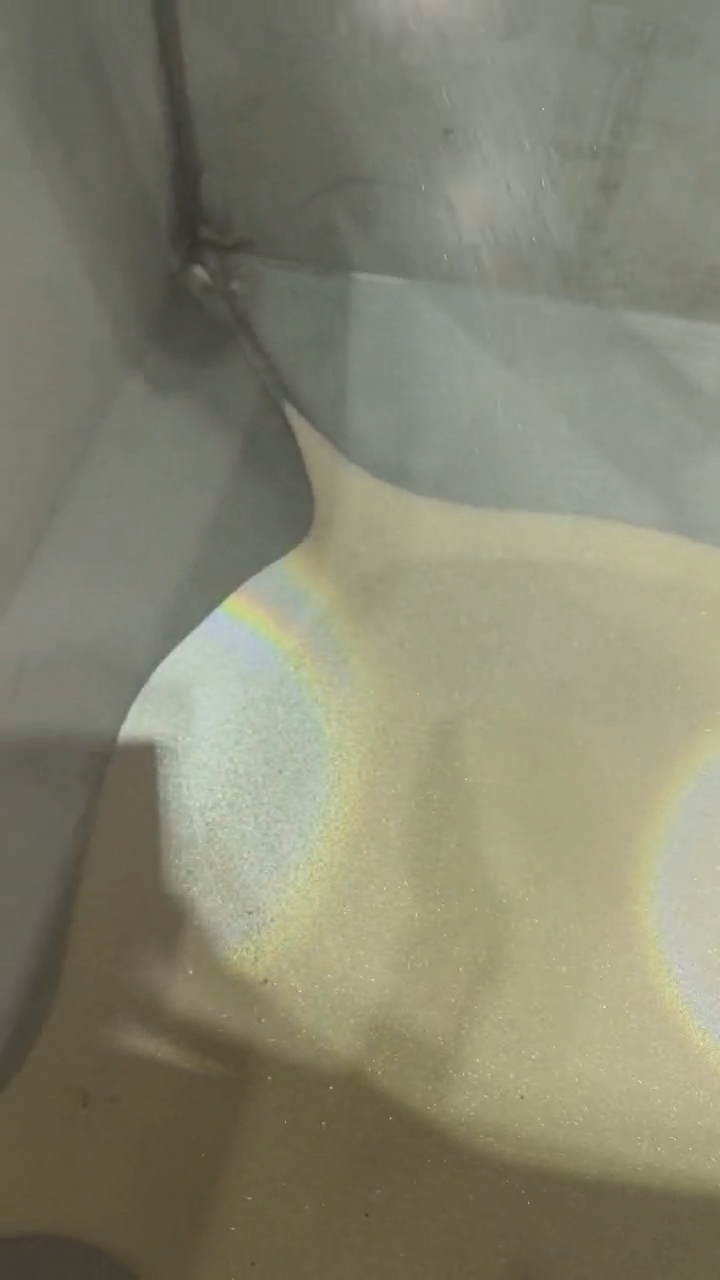
Supplier capacity matters, especially for large or recurring projects. Dylan Tech’s 100,000-ton annual capacity, spread across four strategic bases, ensures on-time delivery even during peak seasons. Their patented production furnace and world-first waste heat recovery system (recognized by the China Energy Conservation Association) demonstrate technological leadership.
Step 5 – Reference Long-Term Partnerships
Ask for case studies. Dylan Tech has supplied 56 tons, 72 tons, 108 tons, and 198 tons to various road marking companies over 3–4 years with consistent results: low wear, stable retroreflectivity and zero rejection. One European client noted “the night effect is remarkable” after switching to Dylan Tech beads.
Real-World Use Case: Consistent Performance Over 4 Years
A global road safety manufacturer partnered with Dylan Tech for their EN 1423 drop-on bead supply. Over the course of 4 years, they received 20 tons annually with the following outcomes:
- 100% pre-shipment test pass rate.
- Retroreflectivity values consistently exceeded EN 1436 minimums.
- Bead loss due to traffic wear was 20–30% lower compared to the previous supplier.
- No complaints or rework claims.
This case underscores that certification is only the starting point; long-term consistency defines a truly certified glass beads supplier.
Frequently Asked Questions (FAQ)
A: Type 1 beads have a sieve range of 1180–150 μm and are used for standard drop-on applications. Type 3 beads are larger (1700–710 μm) and deliver higher retroreflectivity for high-speed highways. Both are available from certified suppliers like DYLAN TECHNOLOGY.
A: Check the certificate number (e.g., 23226Q00027R001) against the issuing body’s database (CFC in this case). Ensure the scope explicitly covers “glass beads” or “production of glass products for road marking.”
A: Both are acceptable under most standards as long as the recycled glass does not contain impurities that affect refractive index or durability. Dylan Tech’s beads are primarily made from recycled glass, meeting the same optical and mechanical properties as virgin beads.
A: Most suppliers, including DYLAN TECHNOLOGY, offer an MOQ of 1 ton. Larger quantities benefit from more favorable pricing and faster lead times (45–60 days for production).
A: Yes. Many certified suppliers provide custom color, size and surface treatment. Dylan Tech offers OEM services, including custom voltage and logo printing on packaging, with flexible terms.
How a Certified Supplier Mitigates Your Procurement Risks
| Risk | Control Method | Dylan Tech’s Measure |
|---|---|---|
| Delivery delays | Production planning & safety stock | 100,000 ton annual capacity, 4 bases, multiple production lines |
| Quality deviation | Full-process testing | Laboratory with CAMSIZER, X-2600; ISO 9001 system |
| Raw material shortage | Multi-base sourcing & long-term supplier contracts | Strategic bases in Liaoning, Shanxi, Hebei, Henan |
Conclusion: Don’t Compromise on Certification
Selecting a certified glass beads supplier is the most reliable way to ensure road marking projects meet safety standards, pass acceptance tests and deliver long service life. By following the steps outlined above—defining your standard, verifying certificates, auditing test data and checking production capability—you can confidently partner with a manufacturer that provides both compliance and performance.
DYLAN TECHNOLOGY invites you to download their full corporate brochure to review all certifications, product specifications and case studies in detail.
📄 Download Corporate Brochure (PDF)
For specific quotation or technical questions, contact: Dylan
Email: dylan@xgbead.com | WhatsApp: +86 186‑3166‑3616
Have Questions or Need More Details?
Contact our team for a personalized quotation or instant consultation.
Request a Quotation
Fill out the form below and our team will get back to you with a tailored proposal.
WhatsApp Direct Chat
Prefer to chat in real-time? Message us on WhatsApp for instant assistance & quick answers.
- Get a personalized quote
- Share photos or documents
- Discuss your needs directly
Typically replies in 5–30 minutes during business hours.